

















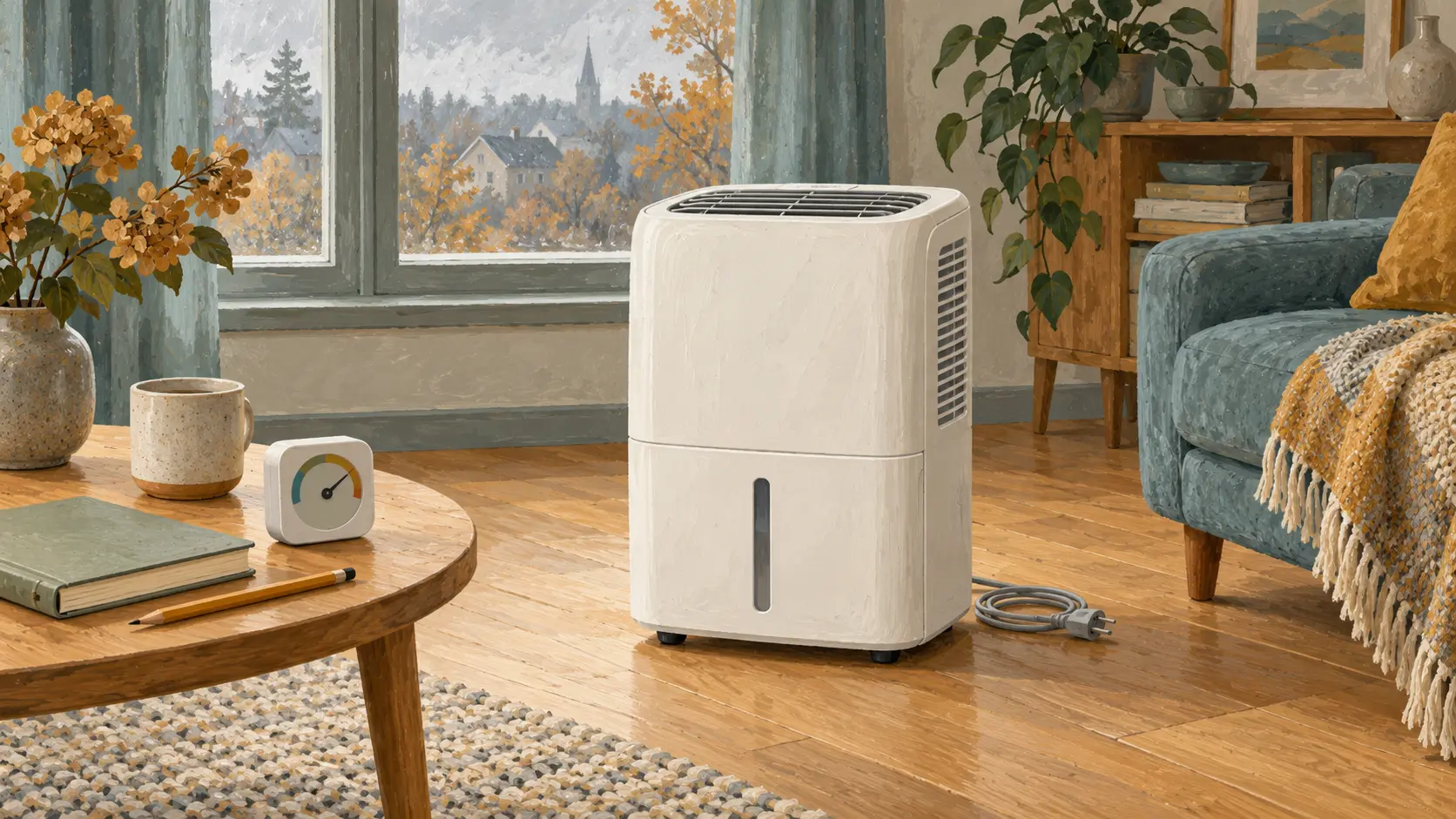
Wet coats and indoor laundry can make an autumn household rethink how it manages moisture. A cheap used dehumidifier may look like an easy answer, but this is a purchase where an attractive case and a running fan leave important questions unanswered. Start with the room, the exact model and its history. Be willing to walk away before arranging collection.
Put the safety question first
The UK charity Electrical Safety First explicitly advises against buying second-hand dehumidifiers. This is safety advice, not an Estonian ban. It is still a good reason to compare a new appliance from an established seller before deciding that a used offer represents a saving.
No checklist in a listing can certify an appliance. A demonstration is not an electrical inspection, and a seller's assurance that it worked last winter does not establish its condition today. If the model, repair history or safe operation is uncertain, pause the purchase rather than budget for an unspecified easy fix.
Describe the room before comparing machines
Write down where you would use it, whether that room is heated and where the moisture appears to come from. Measure the available floor space, including the clearances required by the manufacturer. Check that the proposed position does not block a doorway or place a cable across a walking route.
Persistent water ingress needs its cause investigated; do not treat an appliance purchase as a repair to a leaking building. If you already have humidity and temperature readings, keep a short record of when and where you took them. A single number in a seller's room is not a forecast for yours.
Find the exact instructions
Request a readable photograph of the model label and the full model name. Use the manufacturer's instructions, such as Meaco's model-specific manual library, to check operating conditions, installation and transport requirements. Do not transfer a clearance or waiting time from a different machine.
Ask about purchase date, storage, repairs and why it is being sold. Confirm which tank, filter and drainage accessories belong to this exact version. Find out whether necessary replacement parts are actually available, with a confirmed price. A similar-looking tank or filter is not automatically compatible.
Read capacity figures carefully
ENERGY STAR defines removal capacity using specified test conditions. Therefore, a headline litres-per-day figure should not be treated as a promise of collection in your cooler room. Compare documentation on the same basis, rather than ranking machines by the largest number.
Also separate tank volume from removal capacity. Ask how the seller normally emptied the tank and whether continuous drainage was used. If you need a hose arrangement, check the instructions and your actual drainage location before including that option in your plan.
Inspect without opening the appliance
With the machine unplugged, look for damaged casing, a damaged cable or plug, scorch marks, missing components and a cracked tank. Estonia's TTJA electrical-safety guidance requires equipment to be safe and technically sound. Do not power a suspect appliance, remove its casing or attempt a refrigerant repair.
Only consider a normal demonstration when there are no unresolved safety concerns and the manufacturer's setup requirements have been met. Ask the seller to explain the controls and show the supplied accessories. Lack of collected water during a short visit does not diagnose a fault; equally, some water in the tank does not prove long-term performance or safety.
A checklist before deciding
- Can I identify the exact model and obtain its instructions?
- Are its documented conditions suitable for my room?
- Is the history clear, with no unexplained repair or missing part?
- Have I compared the complete cost with a documented alternative?
- Can it be transported and installed exactly as instructed?
- Am I prepared to decline if safety questions remain?
For a Zeppik listing, describe verified facts and disclose known faults rather than claiming that the appliance makes a home healthy. For a buyer, the useful outcome may be a better-informed decision not to buy this particular machine.