

















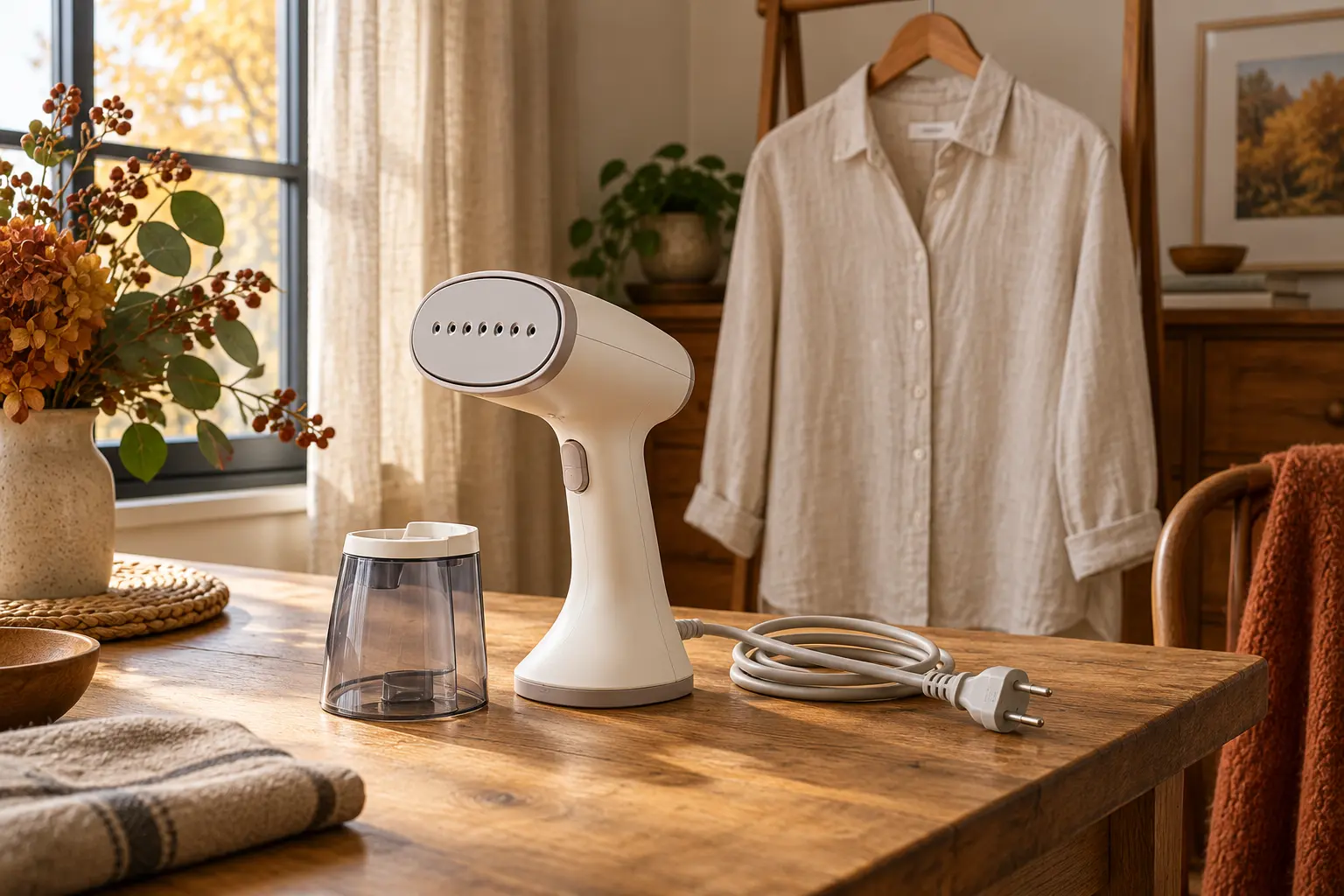
When autumn clothes come out of storage, you may want to tidy them without a long ironing session. Before buying a used garment steamer, identify the actual garments you would use it on. Producing steam does not mean an appliance replaces an iron, washing or professional cleaning.
Find the exact model’s instructions
Ask for a photograph of the rating plate and everything included. Match the model, power requirements, tank, attachments and operating method to the manufacturer’s manual. Different appliances permit different working positions; do not transfer one model’s capabilities to another.
Consider whether you can comfortably hold it when filled, where it rests between passes and whether you have space for any supplied stand. A missing tank or cap is not a minor detail: establish the availability and cost of a compatible replacement first.
Inspect it cold and unplugged
Check the housing, cable, plug, tank and tank attachment. On a floor-standing unit, inspect the hose and stand too. Cracks, melted areas, damaged insulation or questionable repairs are reasons not to switch it on. TTJA advises against using damaged electrical appliances.
Ask what water was used and how it was maintained. White deposits, brown marks or an additive smell need an explanation; “it only needs cleaning” does not prove it works. Do not open the casing to investigate or open hot components.
Demonstrate according to the manual, never on clothing being worn
If there is no visible damage, ask the seller to demonstrate it with the water specified in its instructions. Bring a clean unwanted fabric scrap that permits this treatment. Keep hands and face out of the steam path; never steam garments on a person.
Allow the normal warm-up described in the manual. Watch for repeated leaks, dirty splashes or interruptions. Do not try to cure them by tipping, shaking or adding chemicals during the meeting. Stop if a fault appears; a home demonstration is not an electrical-safety test.
Check fabric suitability and maintenance separately
Compare the garment’s care label with the steamer instructions. GINETEX warns that steam can irreversibly damage material under some care conditions. If steaming suitability is unclear, ask the garment manufacturer; do not begin with an expensive item.
Descaling is model-dependent. Do not add vinegar, fragrance or a general-purpose descaler because the seller recommends it. Philips and Tefal prohibit such tank additives for the models covered by the sources. Use only the method and water allowed by your own manual.
Unplug before filling, cleaning and storage, and follow the manual’s cooling requirements. Start with an inconspicuous area where the treatment is permitted, rather than expecting every crease to disappear.
Five conditions for a sensible purchase
- The model is identified and its instructions are available.
- The tank, cap and required attachments are included or obtainable.
- No visible housing or electrical damage is present.
- A manual-compliant demonstration leaves no unresolved fault.
- The intended clothing permits the treatment.
Walk away if the seller hides the model, cannot explain leaks or suggests operating a damaged appliance. A low price does not resolve an unknown fault.