














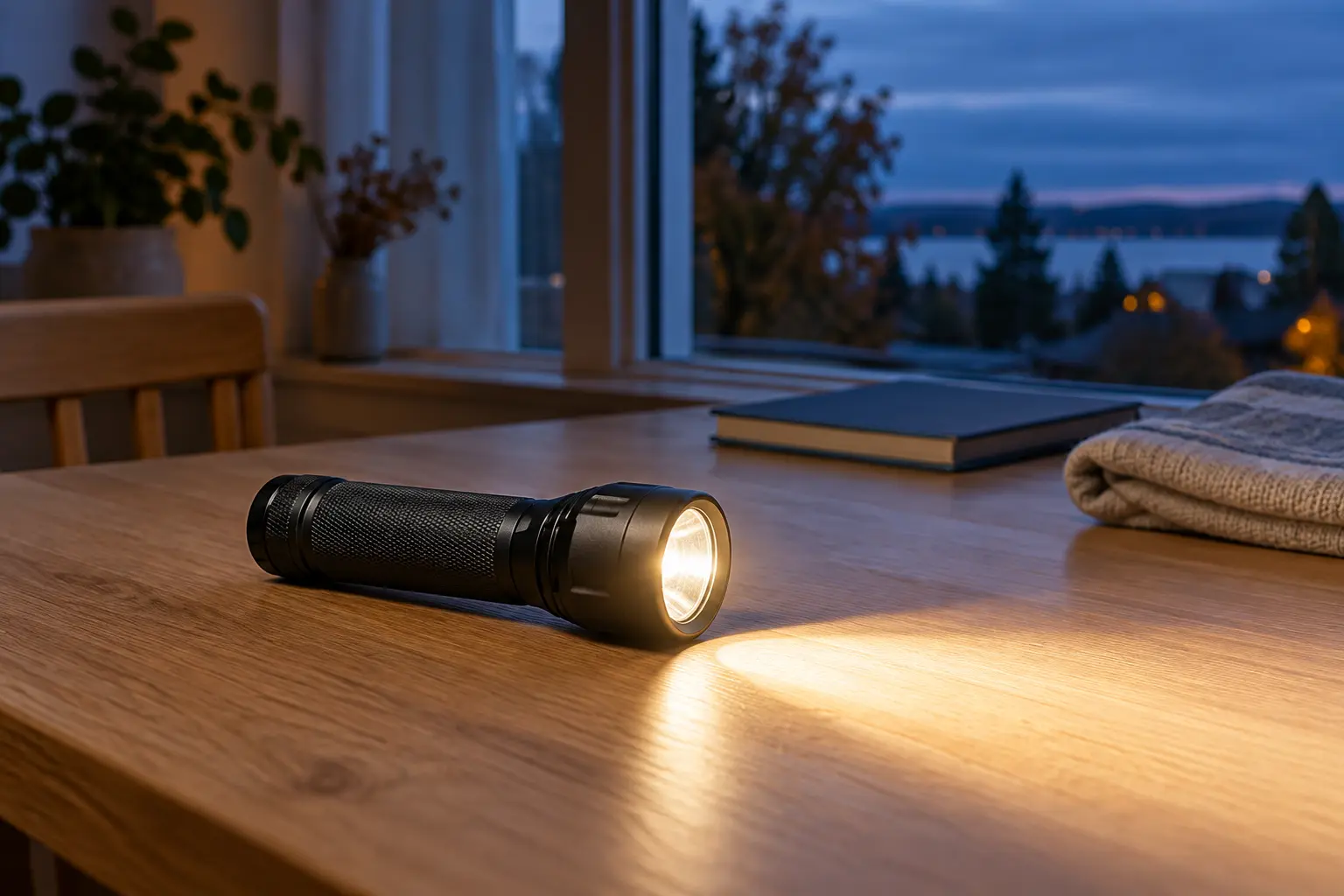
During the darker months, it is worth checking your torch before you need it. Estonia’s Ole Valmis preparedness website recommends alternative lighting, spare batteries and charged power banks.
What do you need the light for?
A handheld torch can help you move around a home; a head torch may suit tasks that need both hands. For lighting a room, compare the diffused light from a portable lantern.
Check that the light is comfortable to hold and easy to switch on. Do not shine a bright beam into anyone’s eyes. Ease of use matters as well as brightness.
Look beyond the headline specifications
Check the type and number of batteries, or how the rechargeable battery is charged. Confirm which cable is needed and whether the instructions are available. A wall socket will not help during a power cut.
A USB port alone does not guarantee compatibility with every cable or power bank. Follow the instructions and test your intended combination beforehand. Do not judge runtime from maximum brightness or battery capacity alone: it also depends on the operating mode and the condition of the power source.
When buying second-hand
Ask for photographs of the markings and battery compartment, a list of included accessories and an honest description of the rechargeable battery’s condition. At collection, check the switch, modes, cover and contacts.
Signs of leakage, a damaged cable or a swollen battery are reasons not to use or buy the item until it has been professionally assessed. Do not dismantle a battery to inspect it.
Try it at home
Charge the torch or fit suitable batteries as instructed. In a dim room, test the mode you expect to use, any attachment and the light’s stability.
Keep the light in a consistent, accessible place, with spare power supplies stored nearby according to their instructions. Check its charge and condition periodically. A torch is only one part of preparing for a power cut: you also need communication, water and other household supplies.
Five checks before putting it away
- You know where and how the light will be used.
- You have tested its power supply and charging arrangements.
- The casing, contacts and cable have no visible damage.
- The switch and the modes you need work.
- You can find the light and spare power supplies in the dark.
Check Ole Valmis for preparedness guidance and the manufacturer’s instructions for the specifications of your particular light.