


















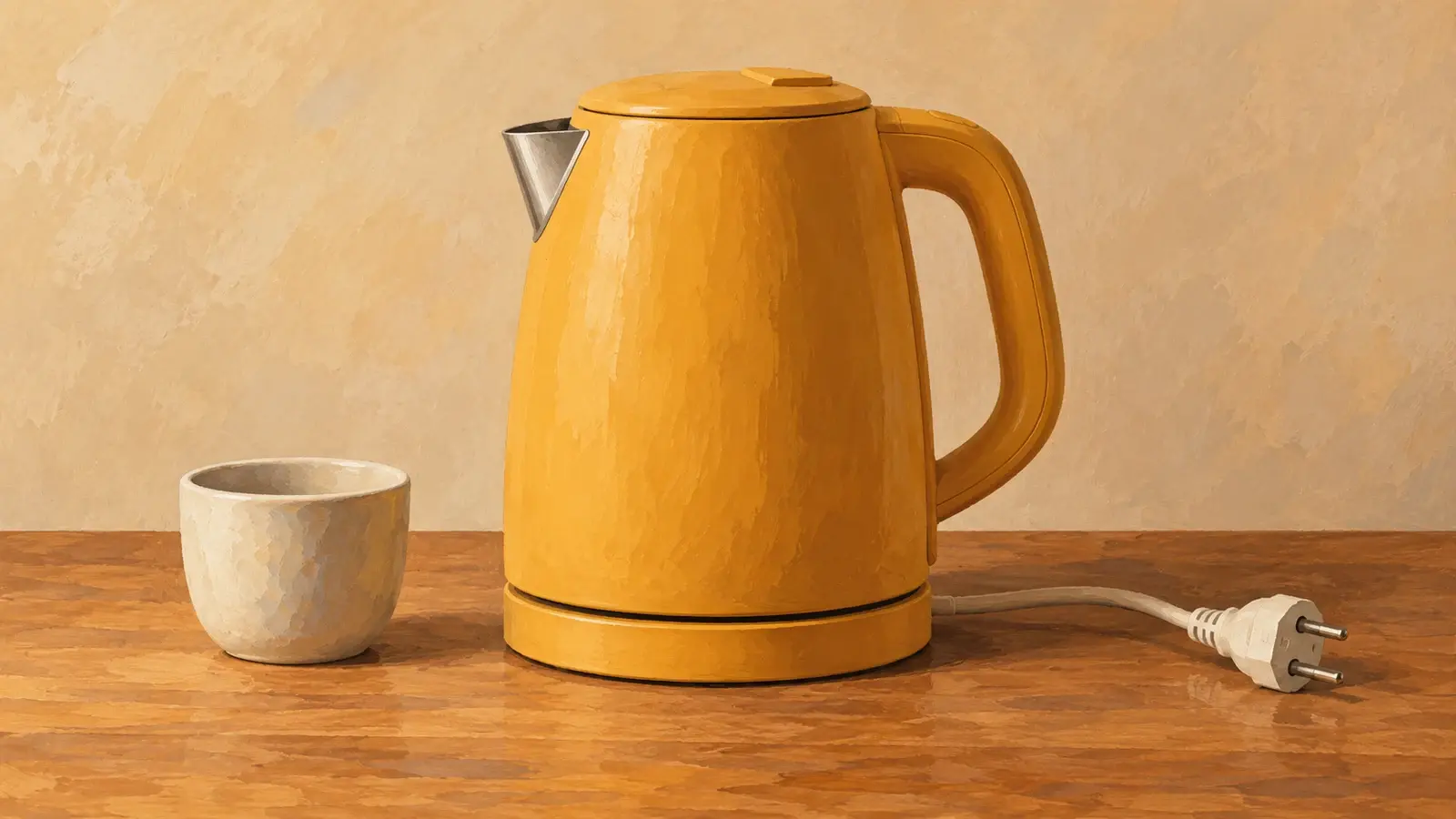
An electric kettle is often photographed so that its base is barely visible. The buyer notices the colour and deposits inside, leaving the question of the complete set until later. Reverse that order: establish exactly which parts are being sold together before deciding how to care for the appliance.
Keep the photographs alongside the discussion of the set. If a marking is blurred or hidden by glare, request another image rather than guessing the final model letter. You may need the complete reference when contacting support.
Ask for two marking photographs
Request a photograph of the kettle's model marking and any accessible identification on the base. For these photographs, the appliance should be unplugged, empty and cool. Do not ask the seller to open the casing or remove electrical components. You need legible external markings, not dismantling.
Record the maker, full model reference and what is known about the base's origin. If it was replaced, ask who supplied the replacement and which part was used. “It fits” is not a substitute for manufacturer confirmation or a documented compatible spare.
Do not establish compatibility by trying it
The same diameter and a similar connector are not sufficient reasons to connect two parts. For example, Russell Hobbs 20460 instructions permit the kettle and supplied stand to be used only together. Russell Hobbs 20460: Instructions
That is a requirement for one model, not a compatibility chart for all kettles. If the part's origin is unknown, send the photographs and model reference to the manufacturer's support team. Until clarified, do not propose a trial using another base. Declining the purchase is reasonable if the set cannot be verified.
List the remaining parts
Use the manual to establish which parts belong with the appliance. Check whether the specified filter is present and ask about its fitting, the lid and the handle. Do not pull out a stuck insert or judge completeness from a single view of the spout.
Ask for close photographs of accessible surfaces and an honest description of known problems. A crack, damaged cable, melting marks or a reported malfunction is a reason to stop and seek servicing, not a challenge to find a cleaner that hides the evidence. A clean exterior does not demonstrate safety.
Plan care from the exact instructions
Once the model is identified, locate the cleaning, filter and descaling sections. Note the permitted product, rinsing procedure and restrictions for removable parts. Do not transfer a recipe from your previous kettle simply because both have metal bodies.
Read the instructions before starting. A powered base and cable are not ordinary crockery; do not immerse electrical parts in water. Do not mix cleaning products or increase concentrations by guesswork. If a surface is unfamiliar or damaged, ask the manufacturer what to do before proceeding.
Make the handover clear
For a sale, photograph the complete set and list its contents in words. Explain what was cleaned, what is known about operation and what remains uncertain. Do not describe a visual inspection as testing or promise that every deposit will disappear with one treatment.
- Identify the kettle's exact model.
- Verify the origin and suitability of its base.
- Compare the parts with the manual.
- Describe known damage and faults.
- Choose care from instructions, not resemblance.
An identifiable set matters more than a shiny casing. If an essential part cannot be established, resolve the question before buying rather than attempting to settle it by switching on.