


















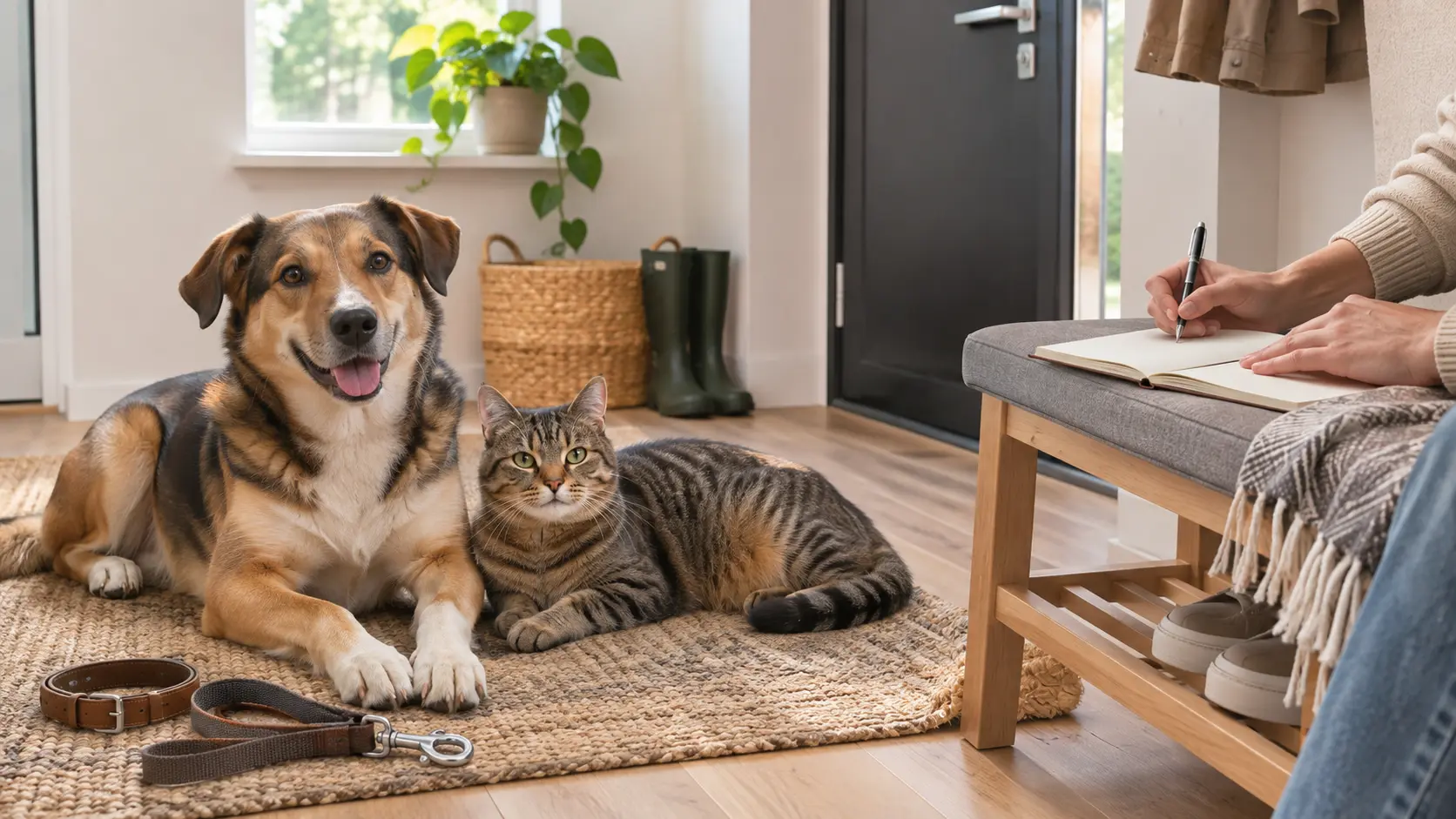
A microchip number in your pet’s documents is a useful starting point. To help someone reach you if your pet goes missing, that number also needs a registry entry with current contact details. Estonia’s Agriculture and Food Board, PTA, explicitly distinguishes microchipping from registration. A changed phone number or an unfinished owner transfer is a good reason to check the record now.
Start with the number and the register
Find the chip number in the documents you received for your pet and any registration confirmation. If the number is unclear or the documents conflict, ask a veterinary clinic to help verify it. Do not guess a missing digit or use the animal’s name as your only check.
PTA names two widely used registers: LLR and Eesti Loomaarstide Lemmikloomaregister. Find out which one holds your pet’s record. If a clinic handled registration, ask which register it used. A missing animal in one account does not by itself settle whether a record exists elsewhere or under a previous owner.
Check the LLR entry, not just the login
For an LLR record, open the owner e-service from the official LLR website. Its instructions use an Estonian ID card and your municipality of registered residence. Owner self-service is available in participating municipalities. If yours is not available, or you cannot sign in, ask the municipality or a veterinarian using the register for help.
Open the animal’s record and compare the chip number with your documents. Then check:
- Is the record linked to the correct current owner?
- Is the telephone number one on which you can actually be reached?
- Is the email address current, with no typing errors?
LLR lets owners update their own telephone and email details. After saving, reopen the record to check the result. If your pet is recorded in the veterinary register instead, ask the registering clinic or that register how to check and correct its details. Do not assume a change in one service has updated another.
Resolve missing records and previous-owner details
If LLR reports that the chip number already exists, stop trying to add a second record. Its guidance says the animal may still be registered to a previous owner. A participating municipality, veterinarian or shelter can check the entry and handle the correction.
An owner change needs more than replacing a phone number. Ask the authorised person which proof of ownership or transfer and which identification details are required. Supply these through the channel they specify. Keep personal codes, document photos and full registry screenshots out of public adverts and comments.
If the animal is genuinely unregistered, establish the appropriate registration route and check your municipality’s current requirements. Ask the clinic or municipality directly: “Where will the chip be registered, and how can I confirm the entry afterwards?”
The future PRIA register does not replace today’s check
As checked on 11 November 2026, PRIA’s national pet register is still being developed for June 2027. Its published timetable includes a transition until 1 January 2029 for dogs, cats and ferrets that are at least 12 weeks old on 1 June 2027. This is not a reason to postpone an obligation that already applies in your municipality. Use the existing registers now and check PRIA’s latest guidance when the new service opens.
Finish with three things clear: the correct chip number, the register holding it and a reachable current contact. Keep a private note of what you checked and any correction still awaiting confirmation.