









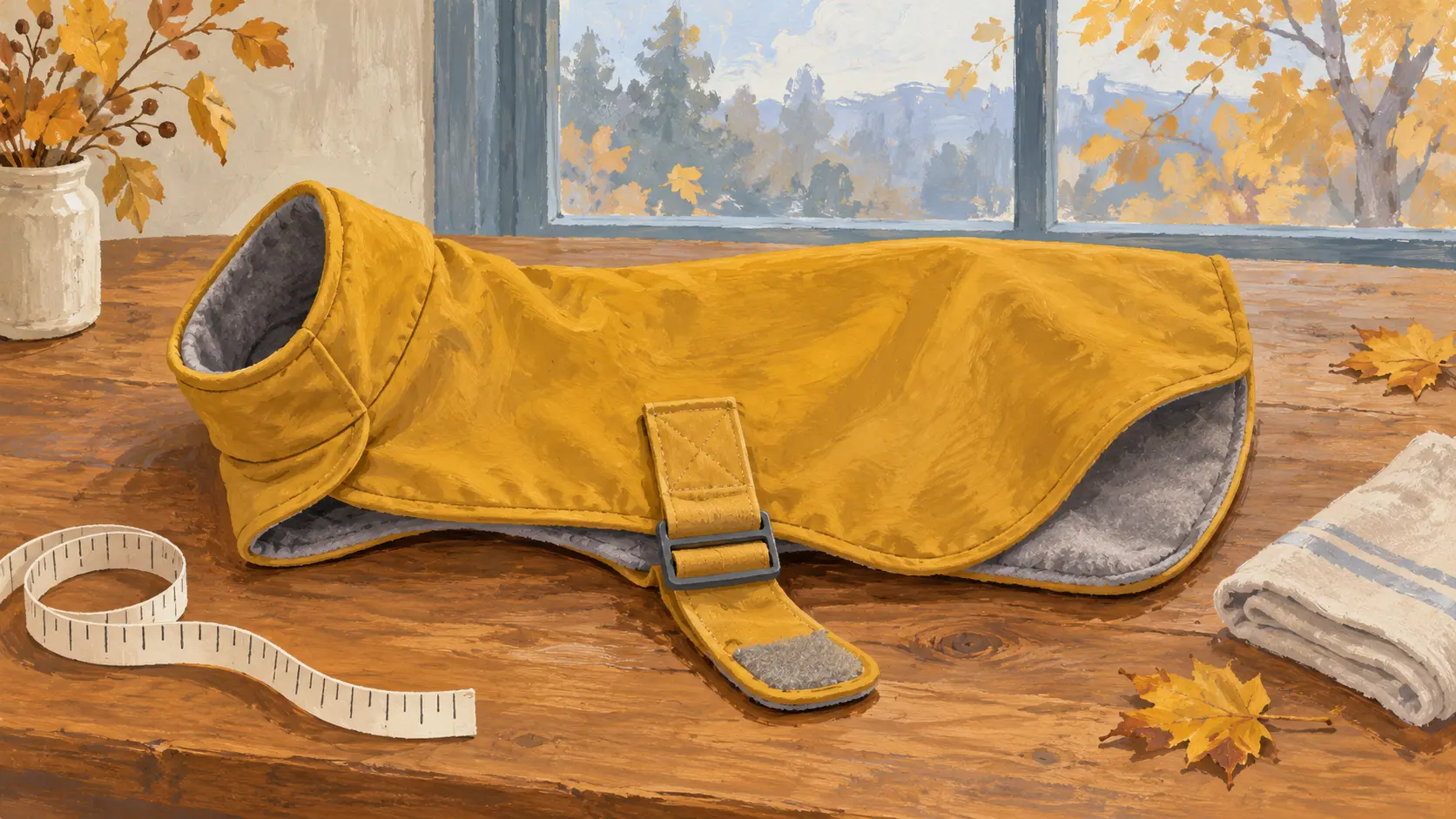
For wet or chilly autumn walks in Estonia, you may be considering a second-hand coat for your dog. Start with the intended use and fit rather than choosing the prettiest colour. A coat that suited another dog can have a different shape, adjustment range or lining from the one you need. This checklist concerns the garment, not a promise that every dog needs a coat or that a particular coat provides a specific level of warmth.
Identify the model and its purpose
Ask for the brand, exact model, size label and care label. Is it a rain shell, a lined coat or another type of garment? Find the original product information rather than inferring properties from the thickness in a photograph. Note any alterations, replaced fasteners or cut straps. A brand name alone does not establish the material, remaining water resistance or compatibility with your walking equipment.
Use the right measuring points
Measure your dog calmly with a soft tape using the selected model’s instructions, without tightening the tape or forcing a position. If the dog is uncomfortable, stop and seek help with measuring rather than restraining it for the purchase. Hurtta provides a separate size chart for each product. Do not transfer another model’s size automatically. Ask the seller for actual garment measurements and photographs showing where the tape starts and ends. A coat measurement and a body measurement are not interchangeable.
Check how the coat would sit
Compare the neck opening, chest coverage, back length and adjustment range using the model’s guide. Consider where your existing collar or harness needs access. Do not assume a decorative ring or opening is a lead attachment: only use the purpose stated by the maker. Ask whether the garment has shrunk or been altered. Do not plan to compensate for a poor fit by tightening every strap to its limit. A photograph of the previous dog wearing it cannot establish fit for yours.
Examine the inside as carefully as the outside
Request laid-flat photographs of both sides, the belly area, edges, seams and fastenings. Look for torn lining, rough repair edges, missing pieces, peeling coatings and worn hook-and-loop material. Ask about persistent smells and storage while damp. Have the seller show zips and buckles normally on the empty garment, not by pulling against a dog. A small cosmetic mark differs from a rough inner patch that will sit against the body. Record unexplained defects rather than assuming cleaning will remove them.
Agree a cleaning plan before use
Ask how the coat was washed and whether its care instructions remain readable. Hurtta’s care guidance says to follow the garment’s washing instructions. Do not apply one temperature or drying method to every coat, especially if coatings and linings differ. If the label is missing, ask the manufacturer about the exact model before choosing chemicals or a hot wash. An uncertain hygiene history or persistent smell is a reason to postpone, not to try stronger treatments blindly.
Keep the first fitting gentle
After appropriate cleaning and complete drying, a suitable, intact coat can be fitted calmly according to its instructions. Watch normal movement; remove it if it restricts movement, rubs or causes distress. Do not test strength, drag the dog by the coat or use a walk in bad weather to prove protection. If fit is uncertain, get competent fitting advice. Include confirmed cleaning, repairs and delivery in the price comparison, and agree any possibility of return rather than assuming one exists.
Before agreeing
- Exact model, purpose and size chart are known.
- Body and garment measurements are clearly distinguished.
- Lining, edges and fastenings are shown.
- Care instructions and cleaning plan are clear.
- Fit uncertainties and total cost are acceptable.
Sellers help most by showing the inside and stating changes honestly. Choose a coat for a clear present fit and condition, not because it once suited a dog of the same breed.