















The most common tax frauds and how to avoid them
Tax scams are getting smarter every year. Scammers use emails, phone calls, fake websites and even social media to trick people into getting money or personal information. Awareness is the best defense. Below we look at the most common tax scams and practical steps to avoid them.
Falsified tax refunds
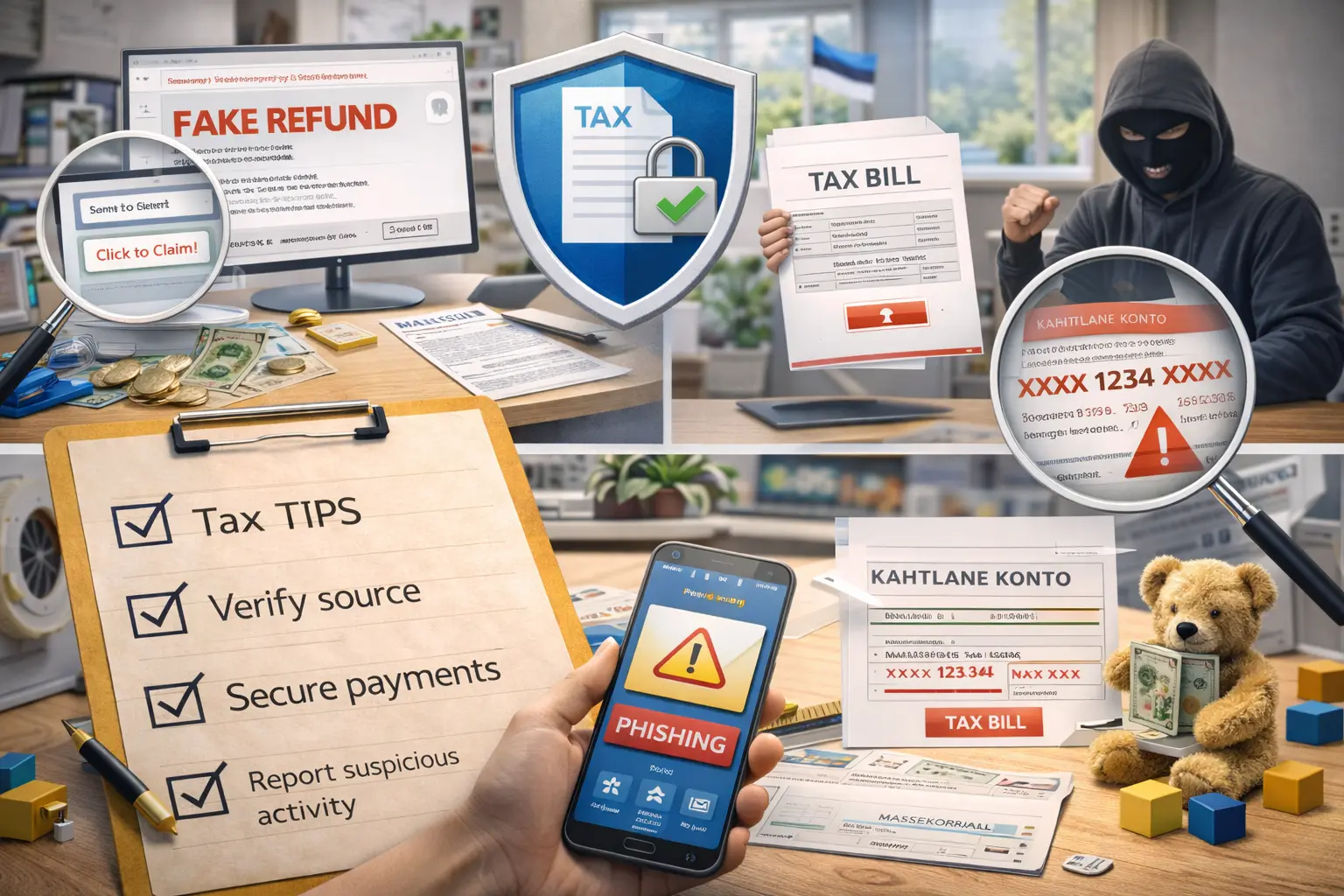
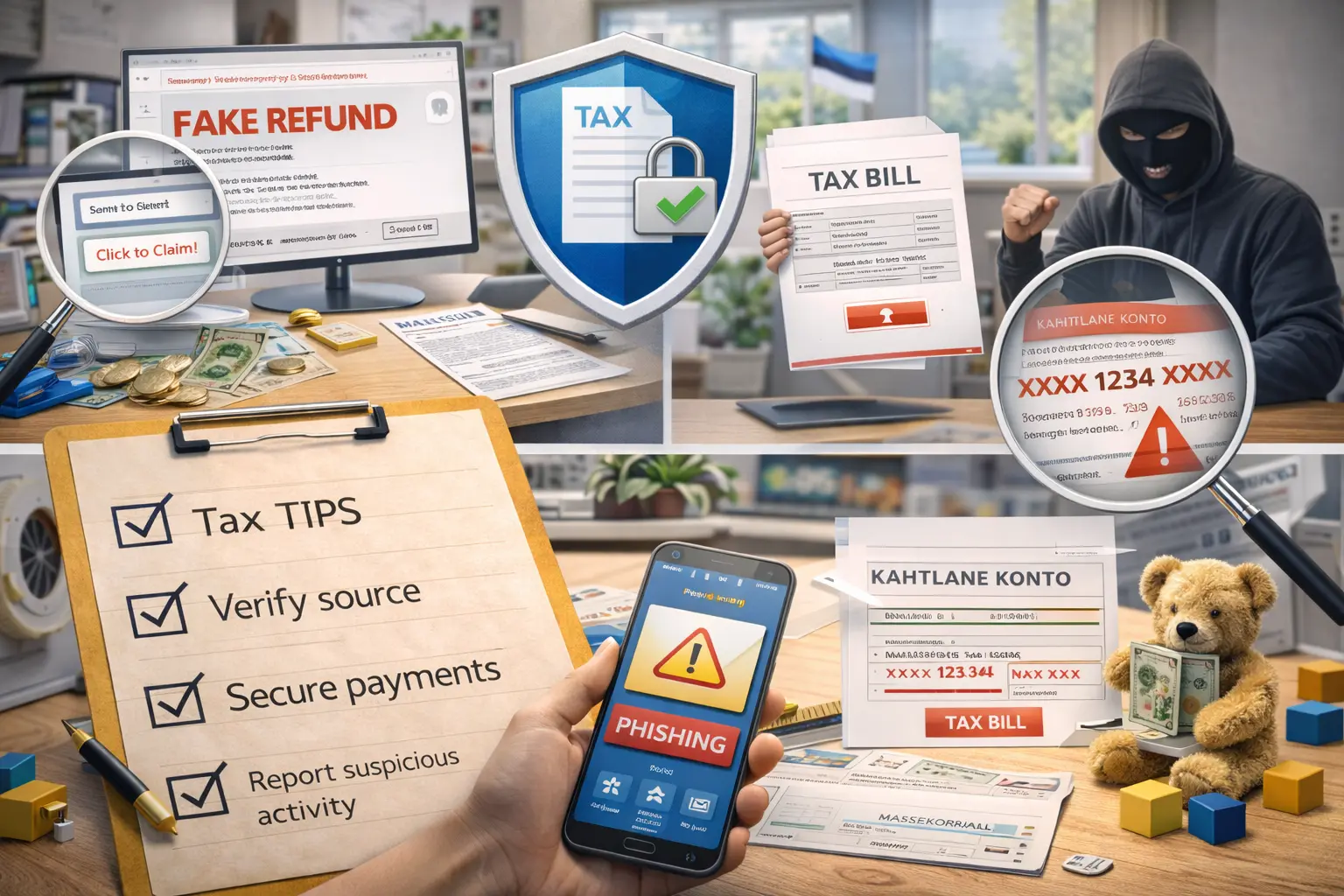
One of the most common schemes is a notice of alleged tax refund. The person is sent an email or SMS asking them to click on a link and enter their banking details to receive the "refund".
- Do not click on suspicious links.
- Always check the sender's address.
- Log into the environment of the Tax and Customs Board only through the official website.
Phishing or data fishing
Scammers create websites that look like official pages to collect passwords and personal information. An intimidating tone is often used - for example, it is claimed that the tax debt must be paid immediately.
- Check the web address carefully (https and correct domain).
- Do not share your PIN codes or Smart-ID/Mobile-ID codes with anyone.
- Use two-step authentication when possible.
Fake invoices and tax claims
Some scammers send official-looking tax invoices by post or email. They often include a quick payment deadline and threats of fines.
- Check the authenticity of the claim through an official authority.
- Do not make payments to unknown accounts.
- Compare the invoice data with previous documents.
Phone calls from "officials"
Fraudsters may call, posing as tax authorities or police officers. They may ask for quick payment or personal information.
- Authorities do not ask for PIN codes over the phone.
- If in doubt, end the call and call the official number yourself.
How to protect yourself?
Safety starts with simple habits:
- Keep your devices and software up to date.
- Use strong and unique passwords.
- Monitor your bank and tax account statements regularly.
- Report suspicious activity to the appropriate authority immediately.
Summary
Tax fraud often relies on haste and fear. Don't let yourself be pressured. Always check the source of the information and act calmly and knowingly. This way you protect both your money and personal data.