


















An inherited textile, wooden object or damaged frame may matter because of its history, not its resale price. Before trying to make it look new, decide what you want to preserve. Estonia's Open Air Museum conservation and digitisation centre Kanut explicitly offers services to private individuals as well as institutions. That makes an initial enquiry possible; it does not mean every object will be accepted or every kind of damage can be reversed.
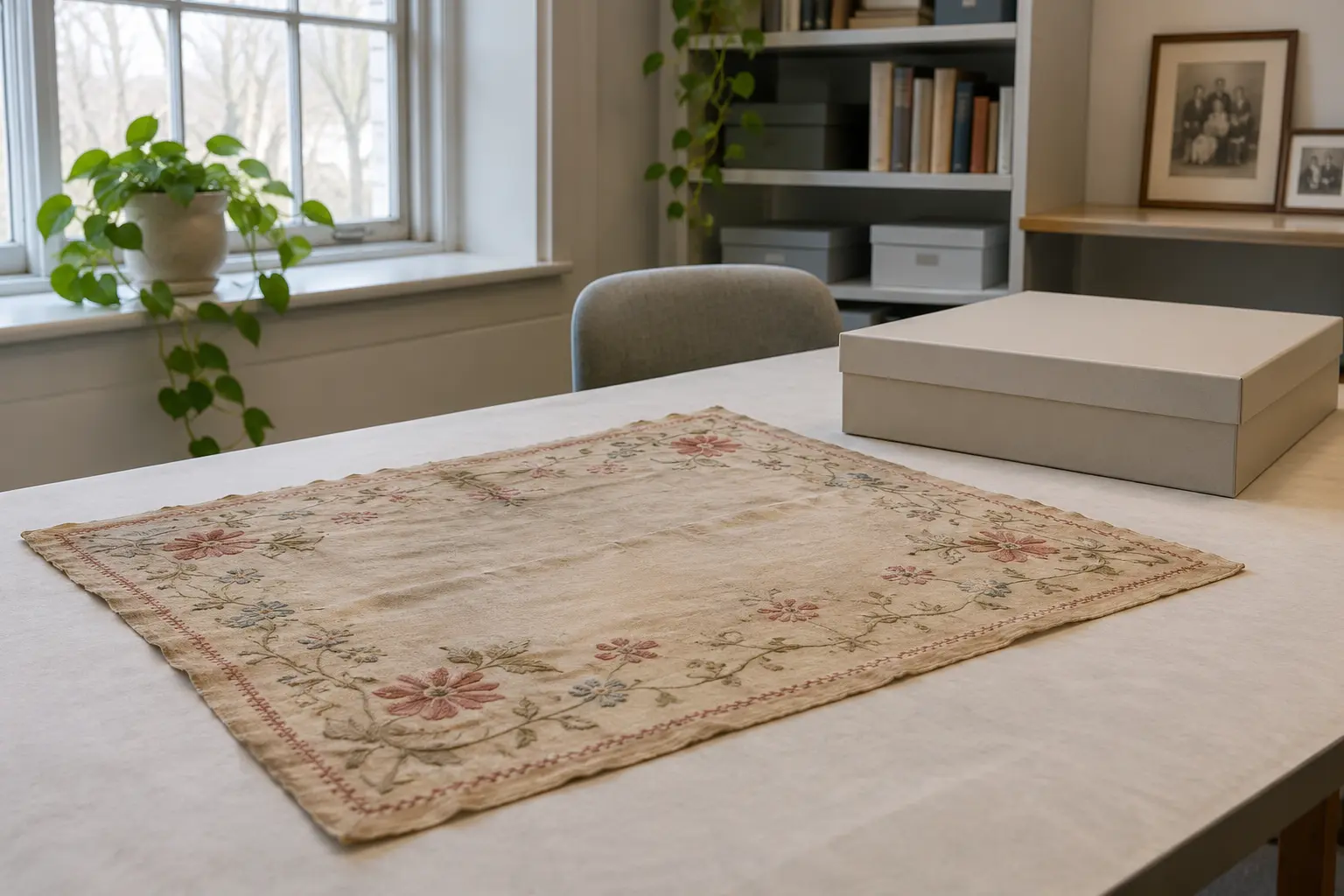
The cover is an AI-generated illustration, not a photograph of Kanut or an instruction for handling a fragile object.
Describe what matters about this object
Start with its identity, approximate dimensions, known materials and what you can observe without manipulating it. Add a whole-object photograph and a few visible details if you can take them safely in its present position. Do not unfold a brittle textile, remove a picture from its frame or dismantle a joint just to produce a better image. Ask how to proceed if ordinary photography would require risky handling.
Write down the history you actually know: who used it, where it was stored and any earlier repair. Separate family recollection from an established date or attribution. A label, inscription or old repair may be part of the information worth keeping, not a blemish to erase. Explain changes such as loose pieces or a surface that is shedding, without diagnosing the cause yourself.
Choose a goal before asking for transformation
Kanut distinguishes conservation aimed at preserving an object from more extensive restoration that may reconstruct missing parts. The suitable approach depends on the object, its condition and the owner's wishes. “I want to keep my grandmother's embroidery intact” and “I want to use this inherited chair daily” are different requests. State the intended use so the professional can discuss realistic options.
Do not assume a brighter surface or an invisible repair is always the right outcome. Ask what can be retained, what intervention is proposed and what uncertainty remains. If relatives share the decision, agree who may approve work before handing the object over. This is not a market valuation or a promise of increased value after treatment.
Leave treatment decisions to the conservator
Kanut's private-client guidance specifically warns against personally gluing broken glass and ceramics. More broadly, do not start a cleaning, polishing, washing or adhesive experiment on the object while awaiting advice. Send information first and ask for object-specific handling and temporary storage instructions. A method used in a published restoration example is not a home-treatment recipe for a similar-looking possession.
Describe suspected mould, loose fragments or unstable surfaces before arranging transport. Do not bring an item unannounced merely because the centre publishes opening hours. Kanut's contact page specifies appointments by agreement and different access arrangements for small and large works. Confirm the appointment, entrance and handling plan for your own object.
Understand assessment and costs
The centre describes initial advice, meetings, an assessment of the work, a quotation and a schedule. Ask whether your request needs a paid condition assessment or written report, what the proposed treatment includes and whether packaging or additional investigation is separate. Its published price list distinguishes services and adds VAT; ask for the total applicable to your order rather than multiplying an hourly rate yourself.
Agree how unexpected findings will be discussed before additional work. Clarify collection arrangements and any storage charges if collection is delayed. Do not transfer free-service conditions for certain museums to a private family commission. Confirm what documentation and care guidance will accompany your object.
Keep the object's story with the result
At handover, retain the agreed description, photographs and list of accompanying parts. On collection, ask what was done and how the object should now be stored, displayed or used. Keep those answers with its history for the next owner. A useful outcome may be a stable, well-documented object rather than one made to look newly manufactured.