


















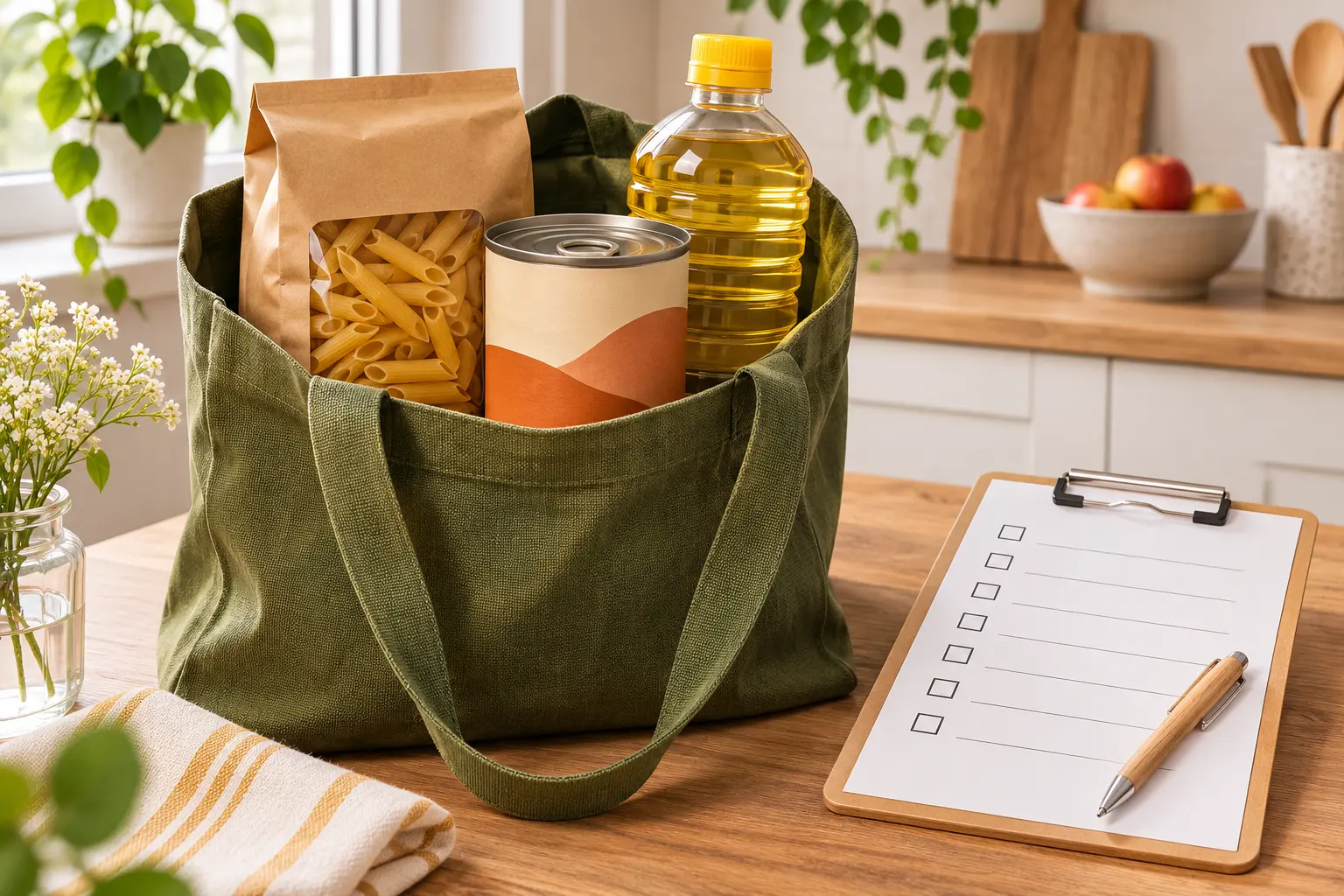
A kitchen cupboard sometimes holds food the household is unlikely to use: too much was bought, plans changed or tastes moved on. Before filling a donation bag, separate the wish to clear a shelf from the task of passing on food another person can identify and use. A small, carefully prepared selection is more helpful than a large bag whose contents need sorting and explaining.
Start with one shelf
Put two containers beside you: “checked” and “ask first”. Keep food away from cleaning products and other household items. Read the product name, date and storage instructions, and check whether the original packaging remains intact. Do not decant grain into a decorative jar or cover ingredient and allergen information with your own sticker.
Ask whether you know how the food has been stored. A tidy-looking pack does not resolve doubts about a long period in unknown conditions. Do not pass on something you cannot describe confidently. This is not a home safety test or a way of finding a destination for questionable food.
Choose the route before leaving home
For collection boxes, Toidupank specifies intact original packs of long-life food needing no special storage temperature. This plan is therefore for sealed pantry items, not a cooked meal or chilled groceries. Do not assume the rules for one donation route apply to another.
Check the organisation's page for a current collection point. For direct delivery, ask the local food bank about your particular selection and a suitable receiving time. Send a short description: products, number of packs, dates and any storage requirements. Keep the reply with the address. An address alone is not a promise of immediate acceptance or collection from your home.
Read the wording beside the date
PTA explains that food must not be distributed after “kõlblik kuni”; “parim enne” concerns quality, not an automatic safety assessment. Do not collapse both phrases into “expiry” in your notes. Ask the recipient about a questionable date before travelling rather than silently placing a doubtful pack in a box.
Copy the date exactly or send a readable photograph. Do not open a pack to taste its contents. A date alone cannot settle suitability; the storage history and packaging also deserve attention. Keep those details together so the person answering your question does not have to reconstruct them.
Pack for a clear handover
Use a clean, sturdy bag that is comfortable to carry. Position heavy items securely and protect easily damaged packs from pressure. Do not hide labels inside your own gift wrapping. Before leaving, compare the contents with what you agreed to bring.
The final check takes a minute: sealed packs, readable labels, understood conditions, confirmed place and time. If delivery cannot happen today, do not leave the bag outside a closed door. Arrange another option. A donation ends with a reliable handover, not simply an empty space in the cupboard.
AI-generated illustration, not a photograph of an actual donation. Labels are illustrative; retain the original labelling on donated food.