

















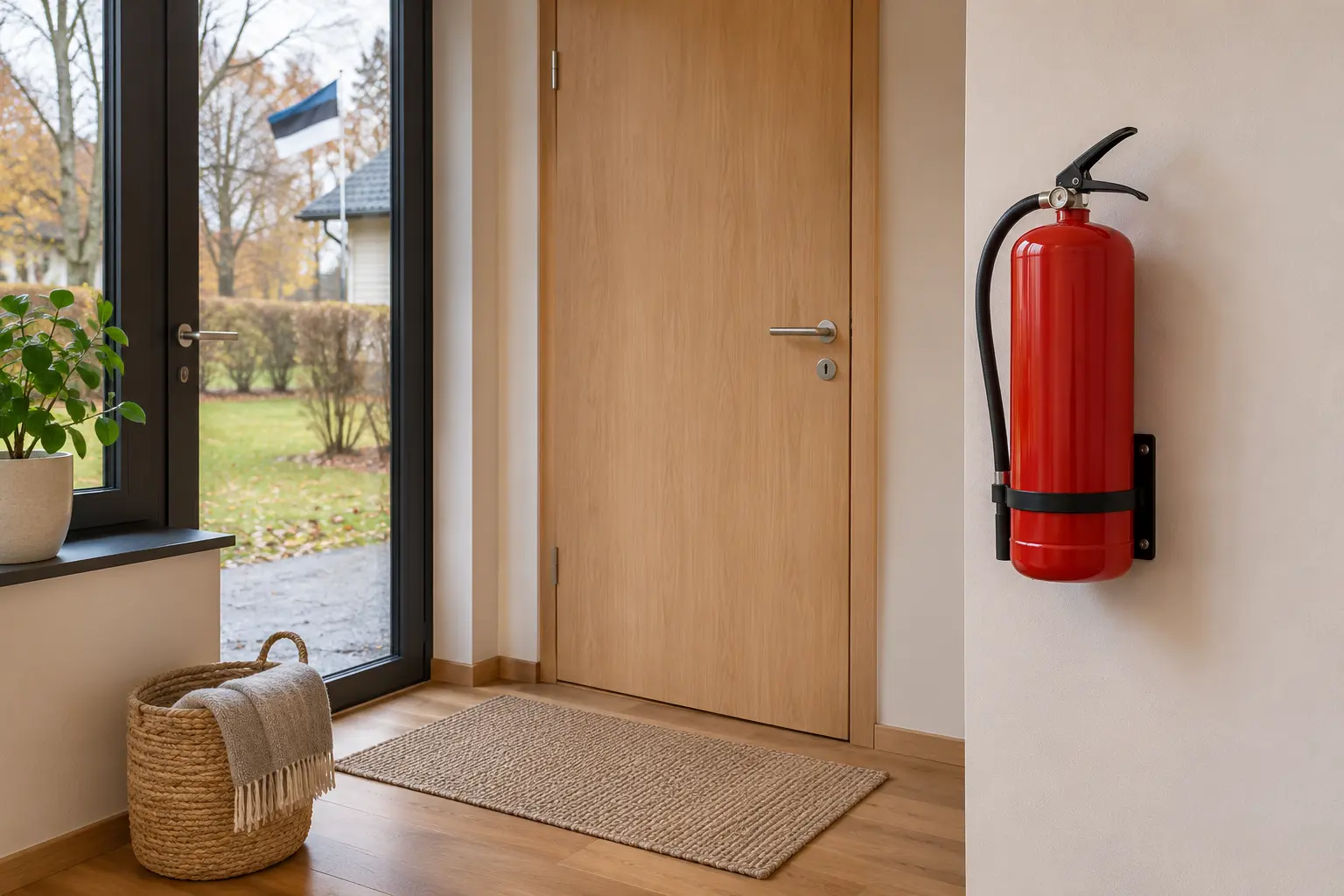
A fire extinguisher left beside a door for years may look familiar without having a clear service history. Before booking an appointment in Estonia, establish which appliance you have, where it has been kept and what work is needed. A green pressure indicator, where fitted, is only one observation. It does not replace professional inspection or prove that the contents will work correctly.
Identify the actual extinguisher
Photograph the whole appliance, its readable manufacturer label and existing inspection and maintenance labels. Note its model, extinguishing agent, manufacturing information and identifier where available. Keep photographs from different extinguishers separate: two similar red cylinders need not have the same history. Do not peel off old labels or obscure the operating instructions with your own sticker.
Tell the service provider where it normally stands. A dry hallway, damp garage and vibrating vehicle are different environments. Mention known use, damage or a missing seal, even if the incident seems minor. Do not discharge it as a test, remove the valve or attempt to refill it. If damage makes handling uncertain, ask the professional how collection should be arranged before moving it.
Separate three different tasks
Estonian rules distinguish the owner's regular visual observation, professional inspection and maintenance. Observation includes accessibility, external condition, legible markings, labels and the pressure indicator if present. It cannot establish every internal condition. If a fault is suspected, arrange inspection immediately rather than waiting for the next date on the label.
Inspection and maintenance are not interchangeable purchases. Inspection assesses the appliance; maintenance involves the work needed to keep or restore it in working order. The extinguisher must be restored after every use. Manufacturer instructions, environment and applicable requirements determine the schedule. Ask the provider to explain your appliance's next inspection and maintenance dates separately instead of applying a remembered interval to every model.
Book a defined service
Send the identifying photographs and describe the circumstances before travelling. Ask whether the business services that type and whether the quoted sum covers inspection only or possible maintenance, parts and replacement. Agree that additional chargeable work needs your decision. A low advertised starting price is not necessarily the total for a used or damaged appliance.
The Rescue Board describes requirements for businesses carrying out extinguisher inspection and maintenance, including a responsible specialist. Ask for the business identity and relevant activity information, not merely somebody's assurance that they can attach a sticker. Agree the turnaround time and what to do about protection while the appliance is away. Do not assume a replacement loan is included.
Check the returned appliance and record
Match the returned extinguisher to your photographs. For an extinguisher owned by a private individual, Estonian rules do not require a separate inspection report: a compliant inspection label is sufficient after proper inspection. Read any report provided and the maintenance report when maintenance was performed. Ask about the result, unresolved defects and any replacement recommendation. Check the appropriate label for the work, provider and next due date. A payment receipt alone does not document the inspection result. Keep the available documents together and set separate reminders where the dates differ.
Return it to its intended, accessible place according to the manufacturer's instructions; do not bury it behind shopping bags. Make sure household members know where it is. This article helps arrange professional service, not choose an extinguisher for every risk or teach firefighting. Neither a fresh sticker nor an internet checklist guarantees that any appliance is suitable for every fire.