

















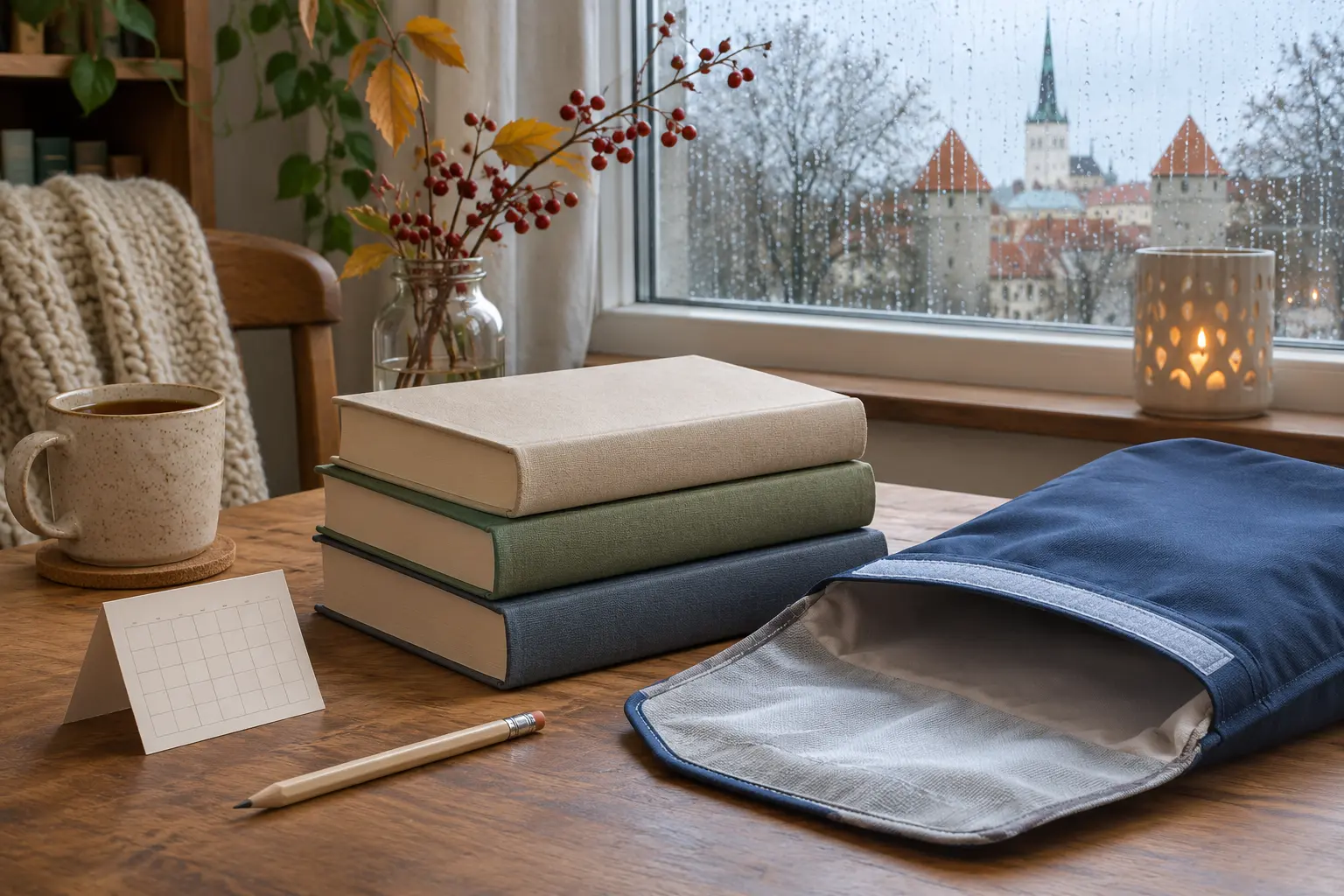
A repair manual, a language workbook or a book for a short course does not always need a permanent place on your shelf. Before buying, check whether the exact edition can be borrowed through MIRKO. The National Library of Estonia’s service brings together books from participating libraries and can deliver physical books to a parcel locker or by courier in Estonia. It is a loan, not a second-hand purchase, so plan the return as carefully as the arrival.
Search for the edition you actually need
Start with the author and full title. Then compare language, publication year, edition and ISBN where available. A familiar cover is not enough: a translated edition, revised manual or different volume may be unsuitable for the task. If a course specifies an edition, keep that requirement beside the search result rather than guessing that any similarly titled book will do.
Availability is a separate question from finding a catalogue entry. Check what can actually be ordered and whether the timing suits your project. Avoid planning a weekend job around an unconfirmed arrival. If the book is essential by a particular day, compare the library option with local borrowing or a used copy that you can collect in time.
Check access and the complete order
MIRKO registration requires an Estonian personal identification code and identity verification. There are separate guardian-consent conditions for minors. Read the current registration conditions before assuming that an ordinary library card or an email address alone gives access. This guide is about physical books; digital lending has a different return process.
Before ordering, check the chosen delivery point, contact details and total transport charge. MIRKO’s physical-book overview says the delivery fee includes return transport. Books from different libraries can create separate orders, so review the final breakdown rather than calculating from a remembered single-parcel price. Check what you will pay now and what could arise from lateness, loss or damage. A library loan is not automatically a completely cost-free alternative to buying.
Treat the delivery as the beginning of a round trip
When the parcel arrives, keep its reusable packaging and return label together. Check that the contents match the order and look for damage or missing parts. Report a wrong book or an existing problem promptly through the service’s official support. Do not repair or annotate a borrowed book yourself. For notes, use a separate notebook; avoid anything that could mark or damage the pages.
Record the due date shown in your account. The published conditions provide a 21-day physical loan, with renewal dependent on conditions such as demand for the book. An extension is not a promise you can build into the original plan. Check renewal before the deadline and confirm that the account actually shows a new date.
Close the loan, not just the parcel locker
Return the books by the same method you received them, following the return label and current instructions for the designated carrier. Do not assume that any convenient library can accept the parcel or that posting it to an address you found yourself will close the loan. Leave time for transport and processing, and keep proof of dispatch until the return is confirmed in the service.
Borrowing works best when the right edition, delivery cost and return schedule all fit your needs. If you will repeatedly consult the book, want to write in it or cannot meet the loan period, owning a suitable used copy may be more practical. The useful question is not simply “Can I get this book?” but “Can I complete this loan without a rushed or uncertain return?”