











AI-generated illustration; not a depiction of a specific venue.
A box of old negatives is not yet a clear scanning order. Before taking it to a laboratory, decide what you want to receive: a convenient family viewing collection, files for a planned print, or material for later editing. This article concerns already developed photographic film, not an unopened film roll or a transfer of copyright.
Describe what is in the box
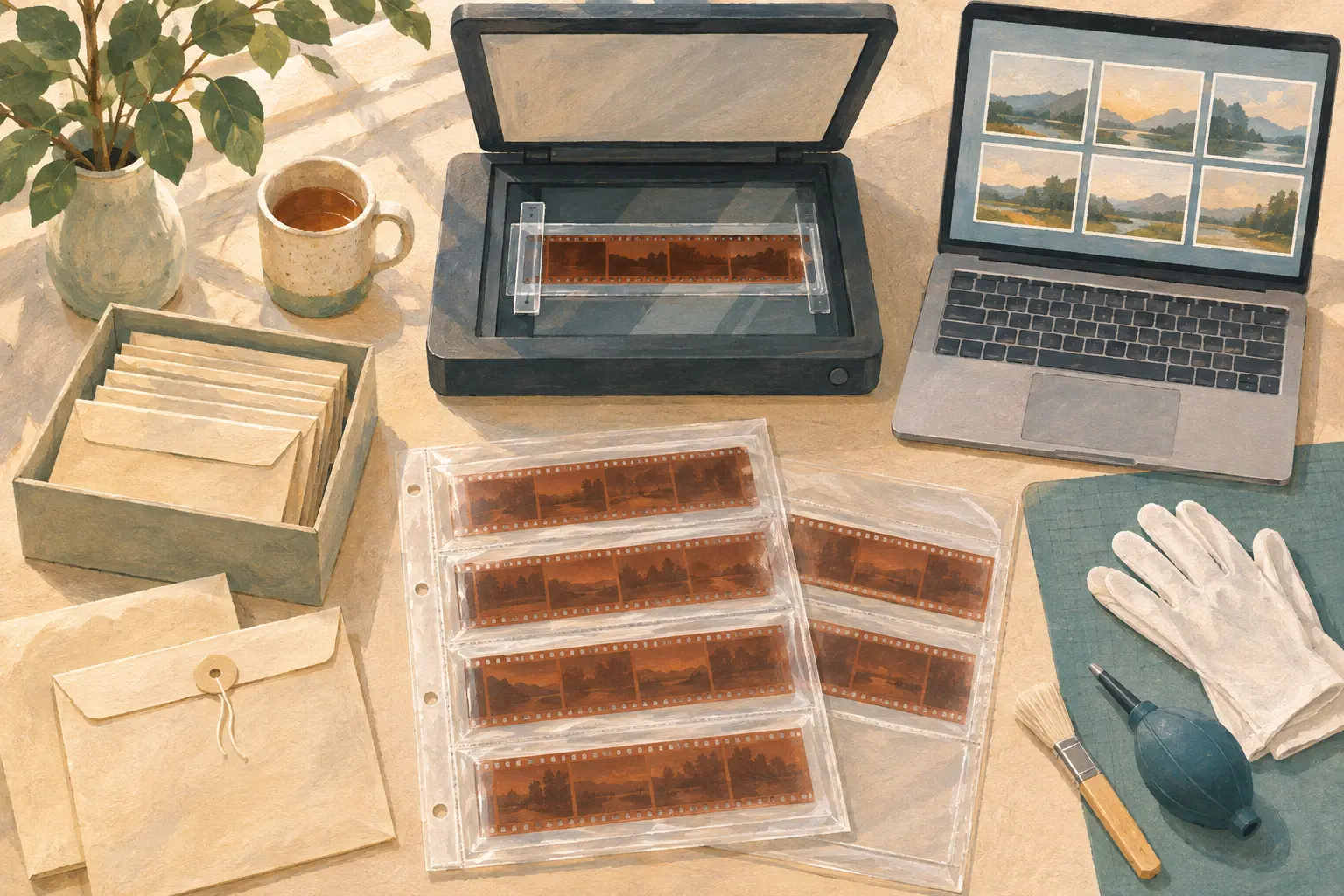
Keep existing sleeves and envelope labels together. Make a simple list by envelope or strip, noting the approximate number of frames and any uncertainty about the material. If you cannot identify a format, ask the laboratory to identify it before agreeing the work. Do not open an undeveloped cartridge to see what is inside.
Avoid rearranging everything into a new sequence before you have recorded the old one. If strips are stuck, brittle or visibly damaged, describe this and ask how to deliver them. A scanning order is not permission for you to try cleaning chemicals or flattening methods at home.
Specify the result, not just “high quality”
The Fotoluks service list distinguishes JPEG and TIFF options and different scanning units. Use that as a reason to request a precise quote, not as a promise of a price for your box.
Explain the intended use and ask for the file format and pixel dimensions in the order. Clarify whether the quote covers every frame, selected frames, complete strips or rolls. Ask what colour correction, cropping and dust removal are included and what would require extra approval. For a large collection, consider asking whether a small paid test order is possible before authorising the remainder.
Preserve the link between files and originals
Agree a naming scheme that you can match to your inventory. Request confirmation of how originals will be returned, whether existing sleeves will be retained and whether any cutting or repackaging is proposed. Record the number of items handed over and keep the receipt. Ask about completion, collection and file-download deadlines instead of assuming indefinite storage.
When the files arrive, open samples from different envelopes, check the count and compare them with the agreed output. Report missing or mismatched items promptly. Keep an untouched copy of the delivered files separately from any versions you edit, and make another backup rather than relying on a temporary download link.
The finished job should leave you with more than pictures on a screen: understandable filenames, a checked inventory and the original negatives back in your care. Digitisation alone does not settle who may publish the images.