


















You have shaped a bowl at home, but drying it is not the same as completing a ceramic object. If you do not own a kiln, a professional firing service may be the next step. Arrange that step early: a studio cannot safely accept every unidentified clay or finish. This article concerns handing work to a professional, not operating a kiln or selecting a firing programme yourself.
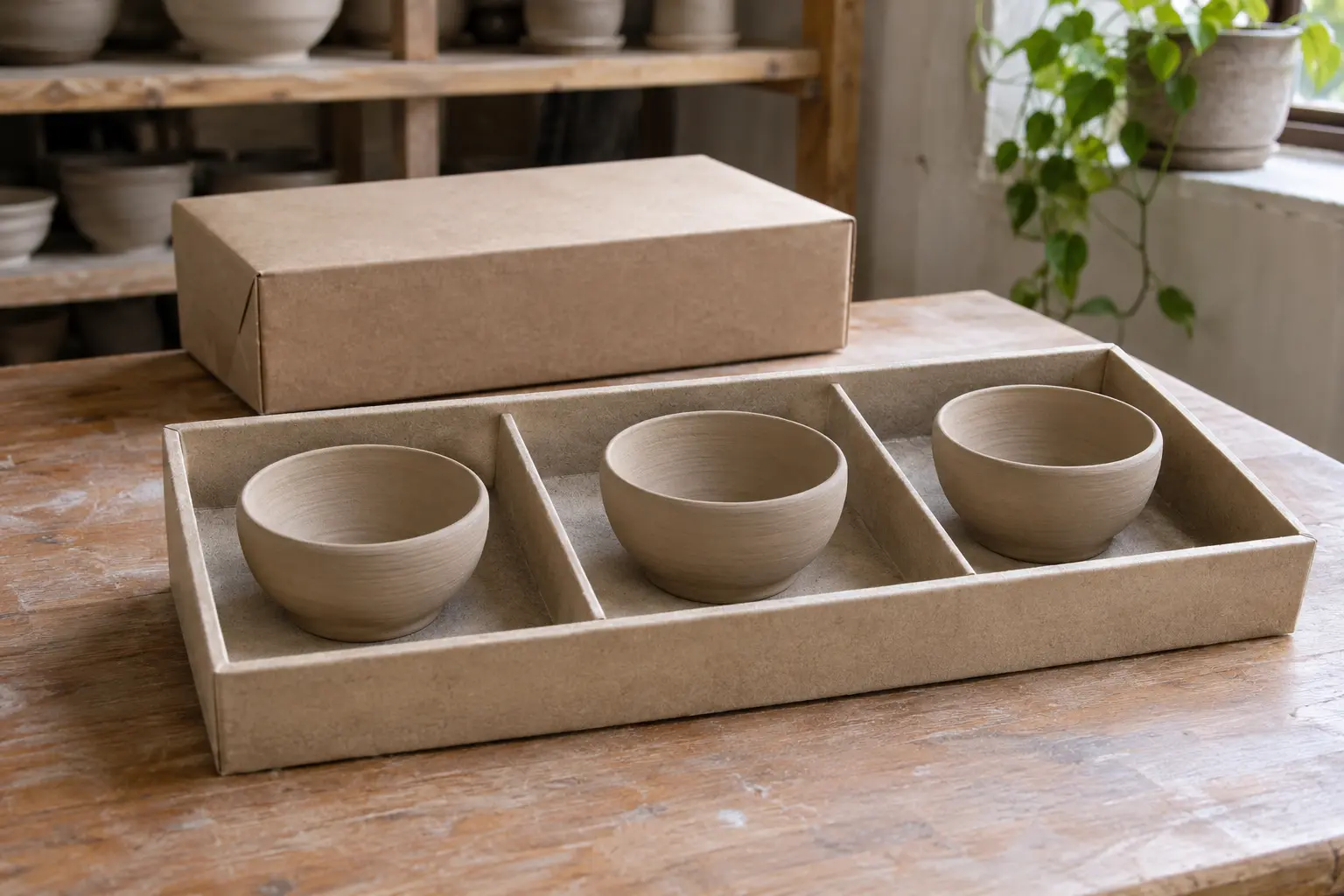
The cover is an AI-generated illustration, not a packing instruction or a photograph of a specific pottery studio.
Start with the material, not a photograph alone
Keep the clay packaging, exact product name and supplier information. Do the same for every glaze or other applied material. Photograph the labels and link to the product documentation when asking about acceptance. “White clay” or “glaze from a friend” does not identify a material sufficiently. If its origin is unknown, say so rather than guessing a familiar brand.
Two Tallinn service providers, Earth with Fire and Loovuspood, explicitly require identifiable clay and glaze sources or brands. Both warn that unsuitable materials or a wrongly requested firing can damage the kiln or other work and carry repair-cost consequences. Read the chosen provider's terms before agreeing. These are their service conditions, not a claim that all studios use one identical policy.
Name the stage you need
Explain whether the piece has never been fired or has already undergone a first firing, and whether glaze has been applied. Ask the provider to confirm the appropriate service for the documented materials. Do not copy a temperature from another maker's project or assume a decorative air-drying product belongs in a ceramic kiln.
A modelling class, studio access, glazing assistance and firing are different services. Ask what is included and who completes any intermediate work. If you need instruction, say so instead of booking only machine capacity. A price for one firing is not automatically the price for every stage needed to finish your piece.
Send dimensions and an honest description
Measure overall height and width, including handles and projecting details. State the number of pieces and send a clear photograph of their current condition. Kiln and shelf dimensions differ; a piece fitting in a cardboard box does not establish that it fits the provider's loading arrangement. Ask before making an oversized object or promising a finished gift by a particular date.
Confirm the quote, acceptance appointment and expected collection process. Providers may price individual pieces, shelf space or a kiln load differently. Do not combine one studio's price with another's size limits. Discuss what happens if an item is rejected or a visible crack is found at intake; do not hide a defect under packing.
Prepare the handover with the studio
Follow the selected provider's drying and surface-preparation requirements. Earth with Fire specifically calls for glaze-free, cleaned bottoms for glaze firing; clarify the requirement for your work rather than improvising scraping or other treatment. If you are uncertain whether it is ready, ask before transporting it. This is not a shortcut to assess technical readiness from an online checklist.
Loovuspood's guidance highlights the fragility of unfired work: avoid heavy stacking and wrapping so tightly that unpacking becomes risky. Agree a stable arrangement that keeps delicate projections visible or clearly identified. Label the outer box as requested and keep a simple piece list and photographs. Contact details belong on the private handover, not in a public listing.
Finish with a collection plan
Do not treat drop-off as a promise of immediate firing. Confirm how completion is communicated and how the pieces will be collected and protected on the return journey. Check the pieces with the provider and ask about unresolved questions concerning their intended use. A successful-looking surface alone is not a reason to promise suitability for every purpose. Keep the material details and service record for your next project.