
















A favourite pair of boots still fits well, but a sole is lifting and one heel looks more worn than the other. Before asking a repairer to make them “like new”, decide what you want to preserve: the fit, appearance or everyday usefulness. A clear conversation is more valuable than a diagnosis guessed from a photograph. It also gives both sides a concrete description of the job.
Bring the pair and describe the symptom
Bring both shoes if possible, even when only one is damaged. Point out the affected area and explain when the problem appears: while bending, walking or fastening the shoe. Mention previous repairs. Rather than guessing the material, show any label and ask the repairer to inspect it.
Take photographs of the top, sides and soles before handing the shoes over. Record the defect and existing scuffs separately. Remove personal items and ask whether insoles and laces should stay. Follow the workshop's preparation instructions; avoid experimenting with glue or aggressive cleaning before the assessment.
Check what the price covers
Kingaabi's price list distinguishes pair and individual-item charges, with complex work priced by agreement. Name each operation separately: heel tips for the pair, for example, and a zip repair on one boot. Do not assume a single line covers the entire job.
Ask for the agreed work and price in writing, together with the procedure for unexpected damage. A useful arrangement is a message explaining the extra work and revised total before you decide. If the repair proves unsuitable after inspection, clarify any assessment and return arrangements before leaving the pair.
Discuss the result as well as the material
Meistritekoda lists sole, zip and seam repairs. That does not establish whether any particular procedure suits your shoes. Ask what may change in height, stiffness, colour or feel. Would a patch be visible? Can the two shoes retain a matching appearance?
Do not interpret a new sole as an automatic promise of waterproofing or grip on ice. Explain where you normally wear the shoes and ask about the limitations of the proposed repair. Avoid prescribing a technique before the cause of the damage is understood.
Collect and check
Keep the order confirmation, contact details and agreed collection date. Mention a forthcoming trip before handing over the shoes, but do not assume same-day completion. At collection, compare the work with the order, inspect both shoes and try them on where possible. Ask when they can be worn and how to care for the repaired area. It is easier to discuss a concern while the agreed work is still in front of you.
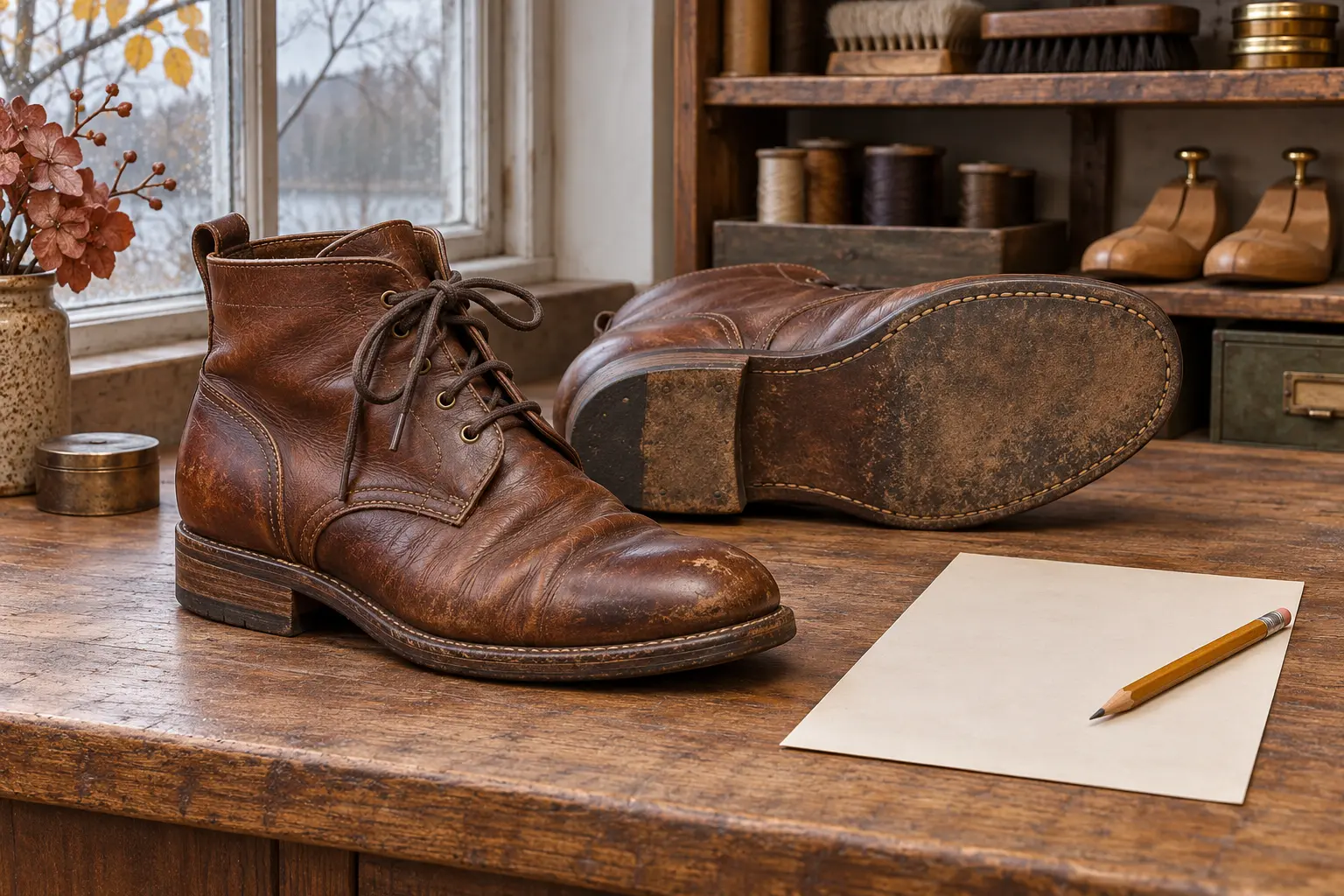
AI-generated illustration, not a photograph of a particular workshop.