

















Count workstations, not chairs
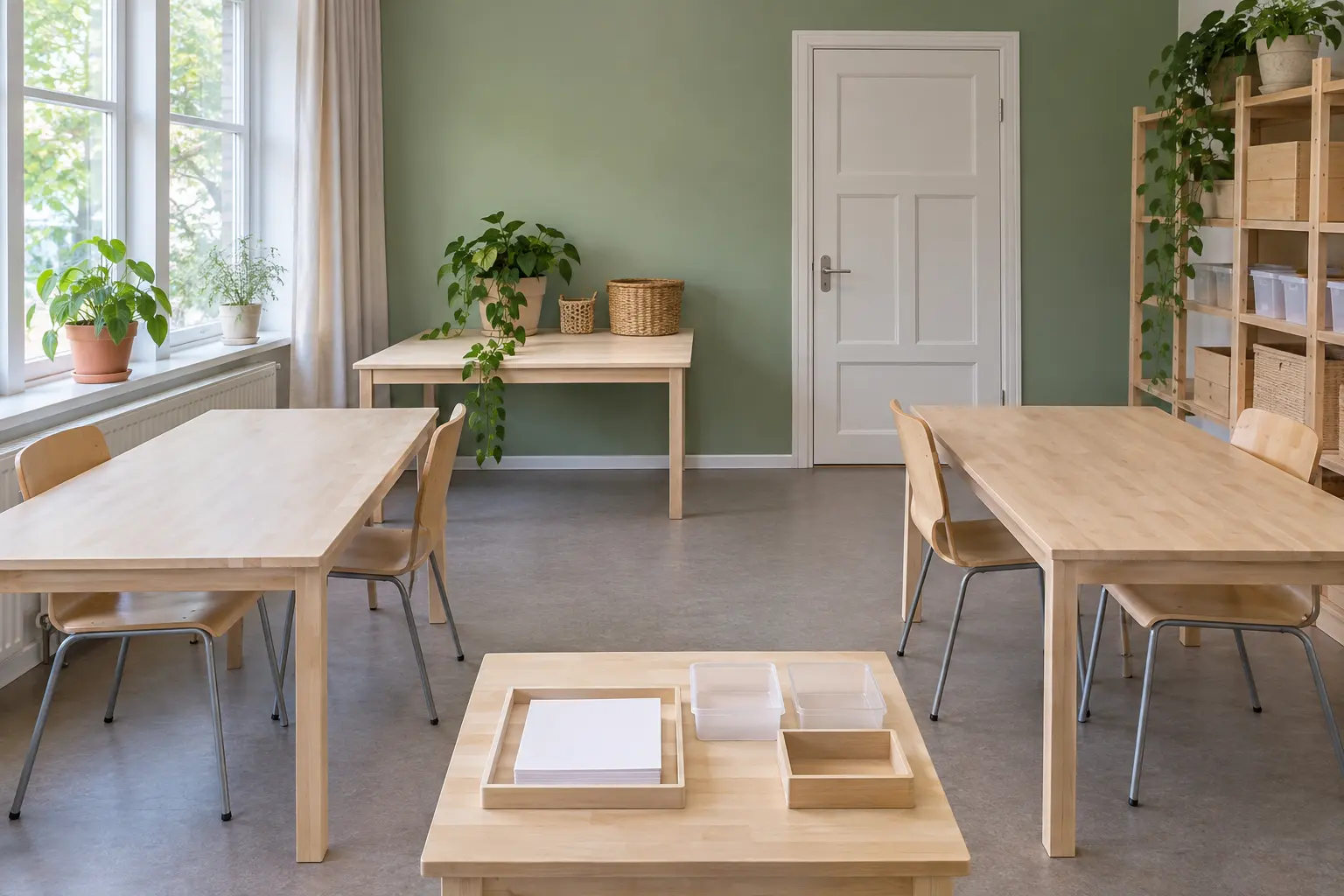
Eight seats are not the same as eight places to make a collage or roll out ink. Test one place setting with a mat, the materials and space for the finished piece. Ask for table measurements and a photo of the actual layout. Set aside a separate surface for demonstrations and somewhere to park supply boxes.
Test the layout before booking
A U-shaped arrangement is a useful starting point if everyone needs to see the instructor’s hands. Separate tables may suit pairs better. Check whether you can reach people from both sides and keep the route from the door clear. Ask whether you may move the furniture and how it should be put back.
Name the materials you will bring
Tell the host exactly what you plan to use, such as water-based paint, table covers or an extension lead. Ask where you can get water and whether there is a place for work to dry. If accessibility matters, check the route from the entrance to the workstation and toilet. Find out how to bring in boxes and who will open the room.
Book time before and after the session
For a workshop from 18:00 to 20:00, you might request the room from 17:30 to 20:30. That is an example, not a rule. Confirm in writing when you get the key, what needs cleaning, where rubbish goes and who checks the room afterwards. Ask for the full price including any extras, and what happens if you overrun.
A message to send the host
“I’m planning a paper craft workshop for eight adults. I need three movable worktables, a separate demo table and access to water. Can I arrive half an hour early and spend half an hour on cleanup after the session? Please send a photo of the proposed layout and confirm the total cost and room handover requirements.”