

















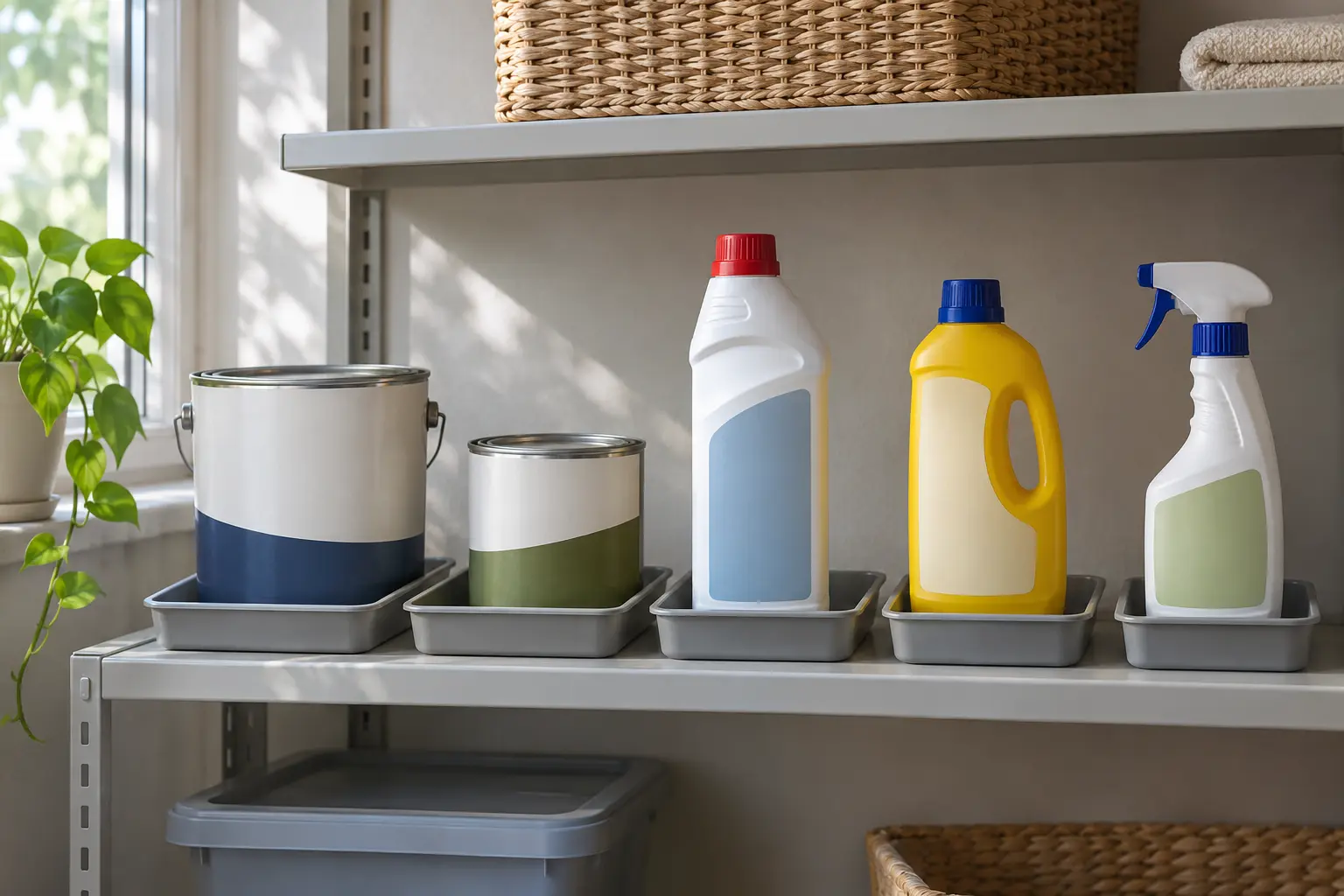
A half-used paint tin, an old adhesive and a bottle whose label is fading can remain on a shelf long after a small renovation. Clearing that shelf is not simply a choice between the packaging bin and the general rubbish. The useful task is to identify what remains, preserve the information and arrange a suitable handover. This guide concerns household residues, not a contractor’s waste or a leaking container that needs an individual safety assessment.
Inventory without experimenting
Read the existing label and write down the product name, approximate remaining quantity and container condition. Photograph readable markings without opening the package for the photograph. Separate a known leftover from something whose identity is uncertain. Do not guess contents from colour, smell or the bottle’s original purpose, and do not try mixing or neutralising anything to make it easier to discard.
A simple list makes the enquiry practical: two tins with paint remaining, one adhesive container and one unidentified bottle. Record uncertainty honestly. If a label is missing, ask the collection operator what information they need before handling or moving it. An unknown substance does not become ordinary rubbish just because nobody remembers buying it. Keep the search for an appropriate destination separate from any attempt to use the product again.
Leftovers and empty packaging are different questions
The Climate Ministry distinguishes empty packaging from containers that still hold unwanted hazardous residues. The latter belong with the remaining contents at an appropriate collection facility. Do not generalise from an empty drinks bottle to a chemical container. Equally, do not assume every empty cleaning-product package always has the same disposal route: check its instructions and the applicable sorting guidance.
The national sorting guide includes unknown substances suspected of being hazardous and advises keeping hazardous wastes separate, leakproof and, where possible, in original packaging. Preserve existing identification. If the container is damaged or you cannot prepare it safely, ask for instructions first. This is not an invitation to pour material into a more convenient bottle or to wash residues into a drain.
Choose a receiving service, not merely a map pin
Tallinn lists waste stations, hazardous-waste collection points and collection rounds as possible routes. Check the current municipal information for the particular service. A scheduled collection round is not a permanent drop-off point, and an old event announcement is not today’s timetable. Do not leave containers at a location when no receiving service is operating.
Before planning transport, describe the materials and amounts to the chosen operator. Ask whether they accept these household residues, what packaging is required, what limits apply and whether your visit involves a charge or eligibility check. Do not assume that all materials, quantities and users share one free allowance. If a tradesperson produced the waste, clarify the responsible disposal arrangement rather than presenting business waste as your household collection.
Complete the handover and prevent a new mystery shelf
Confirm the opening time and agreed preparation before departure. At the site, tell the attendant what you brought, including any uncertainty; do not combine it with another waste stream because that container is closer. Keep any useful handover confirmation with your renovation records. For items still awaiting guidance, note the unanswered question rather than marking them “sorted”.
Next time, record the product and purchase date while the label is readable, and buy only the amount your project needs. Keep usable products according to their own storage instructions, not an improvised rule for all chemicals. A cleared shelf is a good result only when its contents have reached an appropriate destination, rather than another unlabelled container or somebody else’s doorstep.