
















Sending fragile second-hand items: packing used crockery
If you are passing used cups, a vase or another delicate object to a new owner this autumn, plan the packaging before agreeing the delivery price. The bare item and the finished parcel can need very different amounts of space. In wet weather, consider the journey from home to the parcel locker too. This workflow helps you choose between shipping and handing the item over in person.
1. Choose a suitable service
Check the selected carrier's current conditions: whether it accepts the item, the required packaging and any additional service. Omniva states that particularly fragile shipments require its Handle with Care service. Writing a note on the box does not book that service.
Do not automatically apply one carrier's instructions to another. If you cannot provide the necessary protection, discuss collection or suitable specialist transport with the buyer. For an irreplaceable keepsake, consider whether you want to accept the transport risk at all. No household check guarantees that an item will not break.
2. Record the condition before packing
Inspect the item in good light: rims, handles, bases and previous repairs. Photograph existing chips and describe them. Agree the exact number of items and included accessories. A lid or stand may need separate protection even if it looks like part of the main object in the listing photograph.
Work on a clean, dry table. Lay out everything included and compare it with the agreed list. That makes it less likely that a small lid or second saucer will be left on a shelf in the last-minute rush.
3. Measure the protected item, not just the product
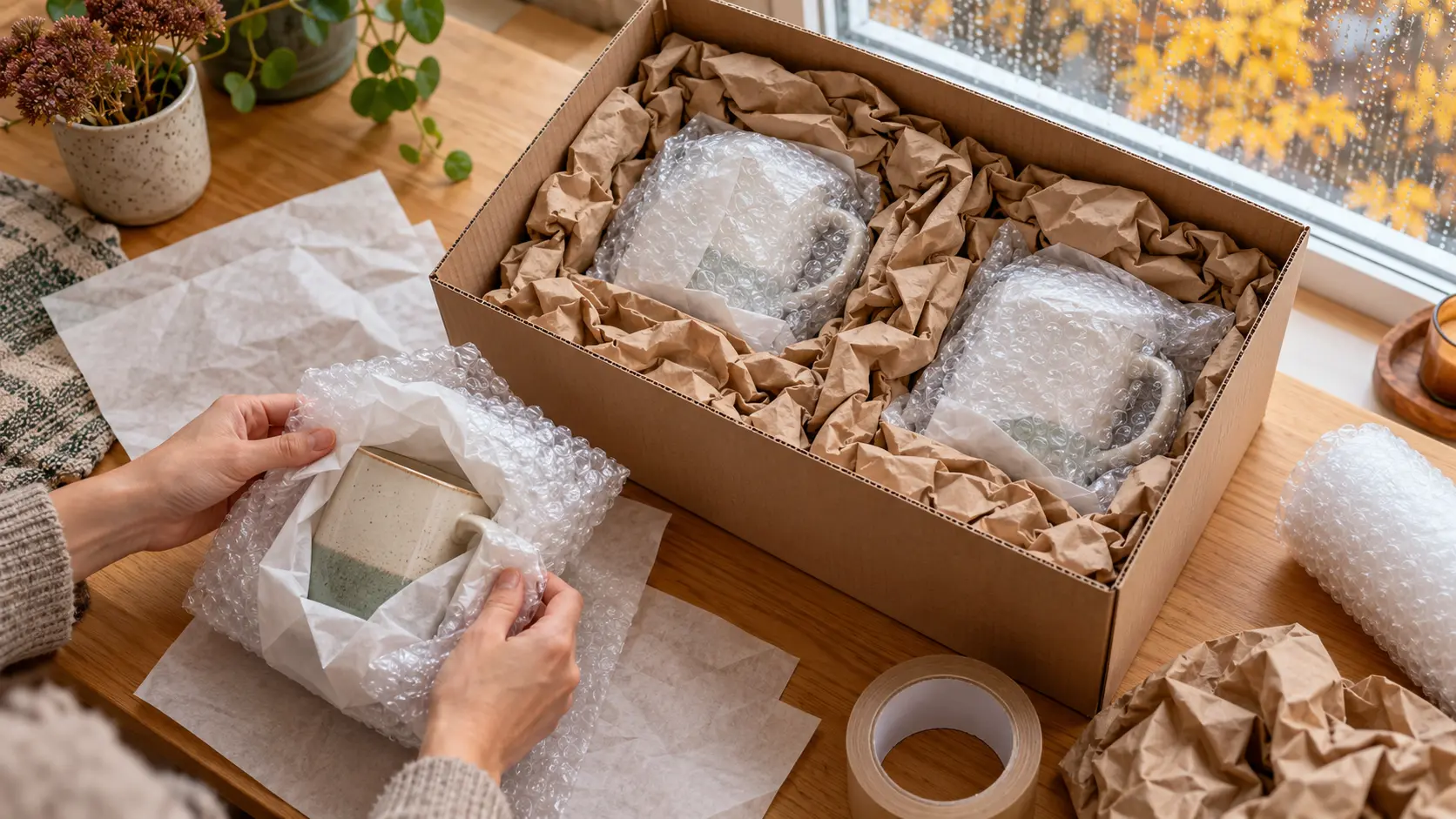
Choose the box after establishing how much room the protective materials need. DHL Express recommends strong corrugated packaging for fragile goods and avoiding weakened boxes. A thin retail gift box should not be your entire protection plan.
Inspect the bottom seam, corners and every flap. Do not use a wet or damaged box. If packaging materials and the appropriate service make the total cost unreasonable, tell the buyer before payment. Do not remove necessary protection simply to squeeze the parcel into a smaller locker compartment.
4. Separate the pieces and support delicate parts
Wrap each item separately. Do not leave handles or other projecting parts bearing the load. Arrange a loose lid so that it cannot strike the vessel. SmartPosti's guidance places fragile items in the centre, away from the outer box's sides. Follow the selected service's instructions for cushioning material and thickness.
Fill gaps so components cannot move freely, without forcing fragile objects under pressure. Photograph the arrangement before closing the box. Ask a packaging specialist if you cannot work out how to support the particular object. Do not test a finished parcel by dropping it.
5. Seal, label and check again
Use the sealing method required by your carrier. DPD Estonia requires old parcel labels to be removed. Check that the new details are correct and readable and that required handling labels are present. Never publish a parcel photograph showing the recipient's address or phone number in the listing.
Measure and weigh the sealed parcel, then select the service from those results. Keep it dry on the way to the handover point rather than leaving the box in the rain. Retain the agreement and dispatch confirmation. Photographs help describe what you sent, but do not replace the carrier's terms or automatically establish entitlement to compensation.
Final check
- The item and any extra service suit the shipping method.
- Contents and existing defects are agreed.
- Each component is protected and held in place.
- Finished dimensions, weight and label are checked.
- You have planned a dry journey to the handover point.