

















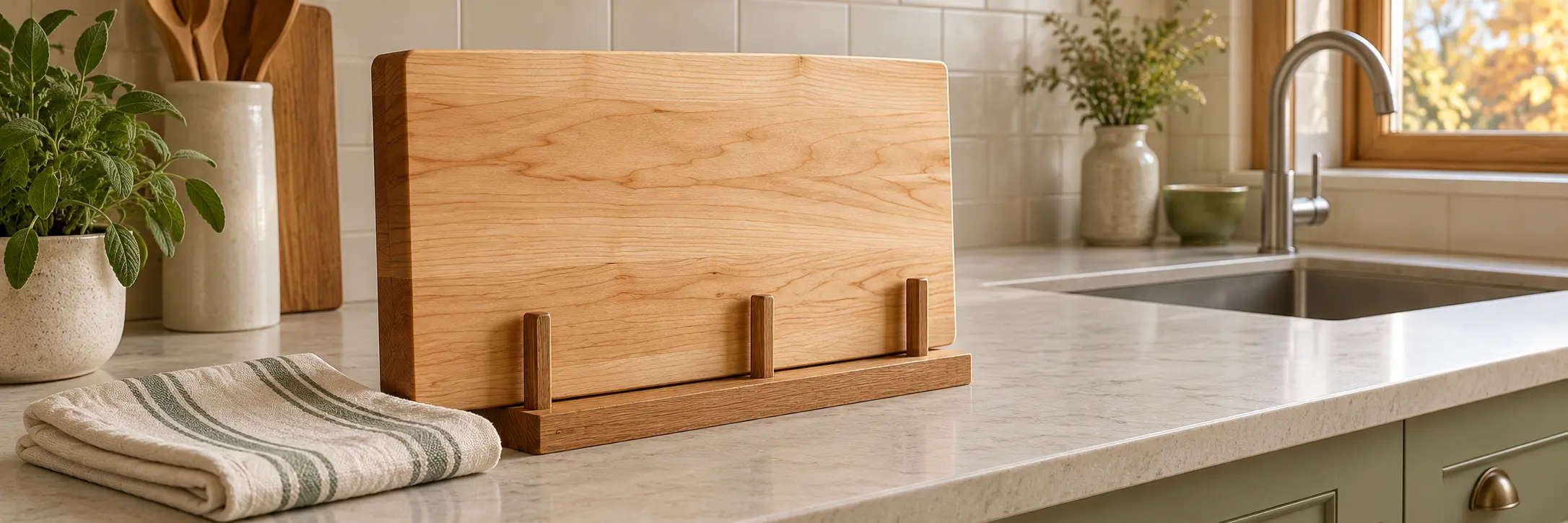
A wooden board that looks dry can tempt you to reach straight for the oil bottle. Make three separate decisions first: is the surface clean, is it completely dry, and which treatment suits its finish? Oil is not a way to conceal dirt or visible defects.
Identify the material and finish
Start by finding the manufacturer, model and care instructions. Oiled wood, a board with another coating and a wood-effect composite are not the same thing. If the finish is unknown, do not experiment with workshop oil or an arbitrary bottle from the kitchen cupboard.
Write down the care details or save the manual link. If you own several boards, a simple note helps prevent instructions for one being applied to another. An attractive colour or smooth surface does not tell you which treatment was used previously.
Clean, dry, then treat
For its wooden boards, John Boos recommends removing food debris, cleaning with a mild soap-and-water solution, wiping all surfaces dry and allowing residual moisture to air-dry before oiling. The manufacturer warns against dishwashers, harsh detergents and excessive oiling.
Those instructions concern Boos boards; check another product’s own requirements. Wash only by an approved method and allow time for drying. The surface should be free of food debris, grease and dirt before treatment. Choose only a product-compatible treatment intended for food-contact cutting boards, following its instructions for the amount applied and removal of excess.
Inspect before refreshing the finish
- Check both faces and edges, not just the most attractive surface.
- Notice cracks, opening glued joints and unidentified coatings.
- Do not conceal an unexplained defect with aggressive sanding.
- Ask the maker or an appropriate specialist if material or condition remains unclear.
If passing the board on, describe its known material, dimensions, treatment product and visible faults. Fresh oil does not demonstrate disinfection or automatically make a damaged board suitable. Honest photographs taken before cosmetic treatment help the next owner understand its condition better than an unsupported claim that it is “as new”. The point of care is to follow the product’s requirements, not hide its history.