


















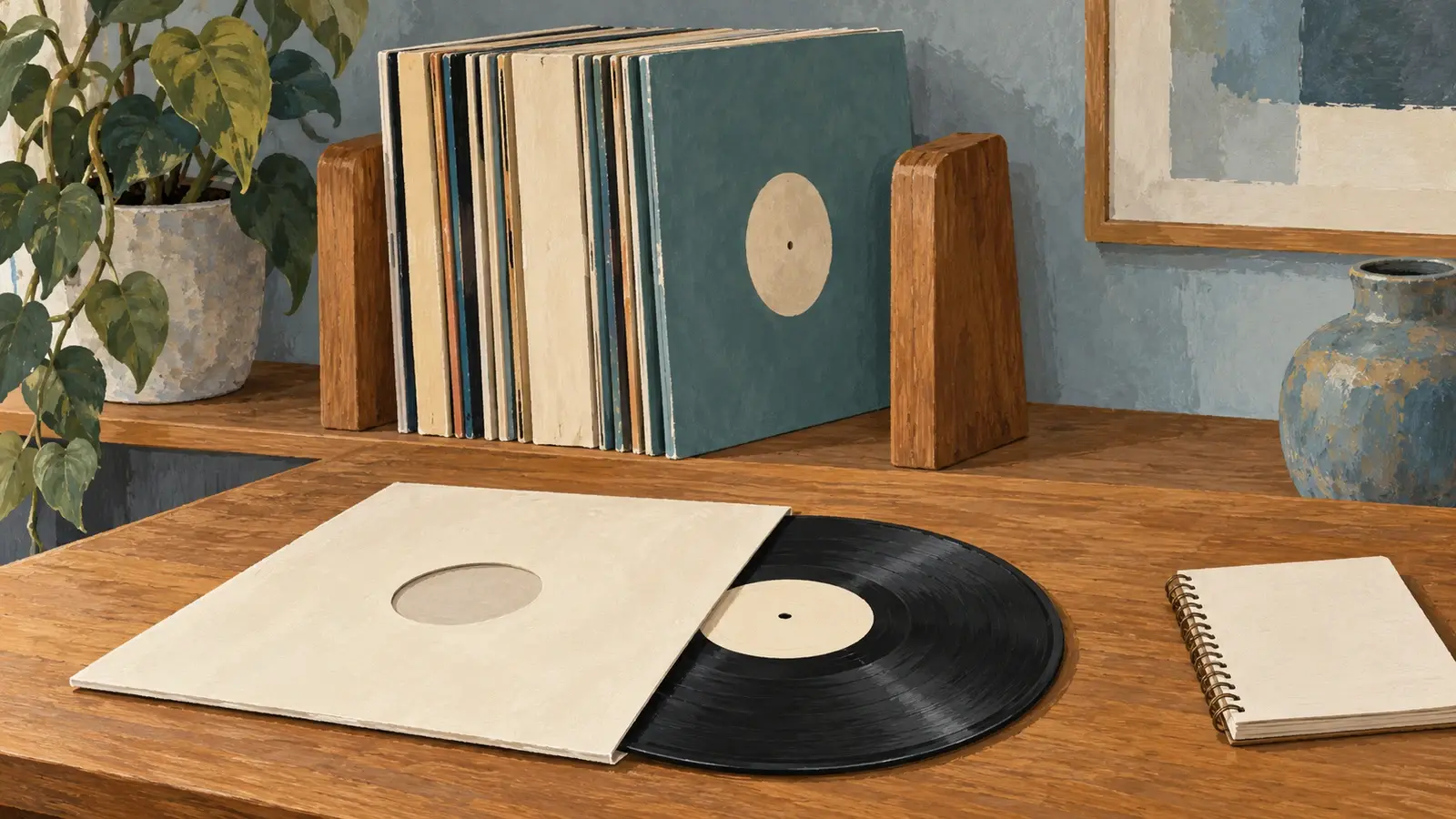
An autumn evening is a useful opportunity to sort a record shelf, but not necessarily to sell the whole stack immediately. First establish what you actually have. The album title, sleeve condition and recording condition are three different parts of a description. A clear inventory keeps them separate and avoids promising sound quality that has not been checked.
Prepare space for one pair
Clear a clean surface and work with one record at a time, keeping it linked to its sleeve.
The Library of Congress recommends holding records by the edge and label area and storing them upright away from heat.
Decide where each inspected copy will go before starting. Avoid making a fresh mixed pile of items already described and those still waiting for attention.
Copy details from the actual copy
Record the artist, title, number of discs and visible edition identifiers. Compare the sleeve information with the centre label. If they differ, do not select the more attractive description for the listing: note the mismatch and investigate. Do not call an edition a first pressing or rare merely because its artwork looks old. Such a description needs separate identification of the particular release, not a similar cover found in a search.
Separate record and packaging condition
Photograph the whole sleeve, its corners, seams and noticeable damage. Then inspect the accessible record surfaces in even light, without trying to straighten the disc by hand. Describe visible marks separately from assumptions about their effect on playback. Writing on a sleeve, a worn corner and a mark across a groove are different facts. A single rating of “good” conceals those differences rather than explaining them to a buyer.
Describe listening checks precisely
If the record has not been played, say “not play-tested”. If only part of a side was checked, specify the section or extent of the check. Do not turn a brief passage without obvious problems into a promise of perfect playback across the disc. Where complete listening is possible on suitable, properly functioning equipment, record observations for each side. Do not play a questionable disc merely to tick a box on a list.
Do not start with a homemade cleaner
Wanting a better photograph is not a reason to apply an unknown mixture or try a random cleaning method. First identify the medium and the procedure supported by reliable guidance for it. Do not describe home treatment as professional restoration. If a mark or residue is unclear, leave the question open or consult a specialist, particularly for a copy you believe may be valuable. Improving the description does not require concealing uncertainty.
Check the contents before handover
- Every record is matched with its sleeve.
- Disc count and edition identifiers are recorded.
- Packaging and record condition are described separately.
- The extent of listening is stated without exaggeration.
- Unknown details and visible defects remain explicit.
Before meeting, compare the inventory with the photographs and actual contents again. When selling several records together, list each one rather than giving only a total. Keep a copy of the list so nothing is confused during handover. A useful description need not sound like an expert appraisal: clearly separating what was seen, heard and remains unknown is enough.