


















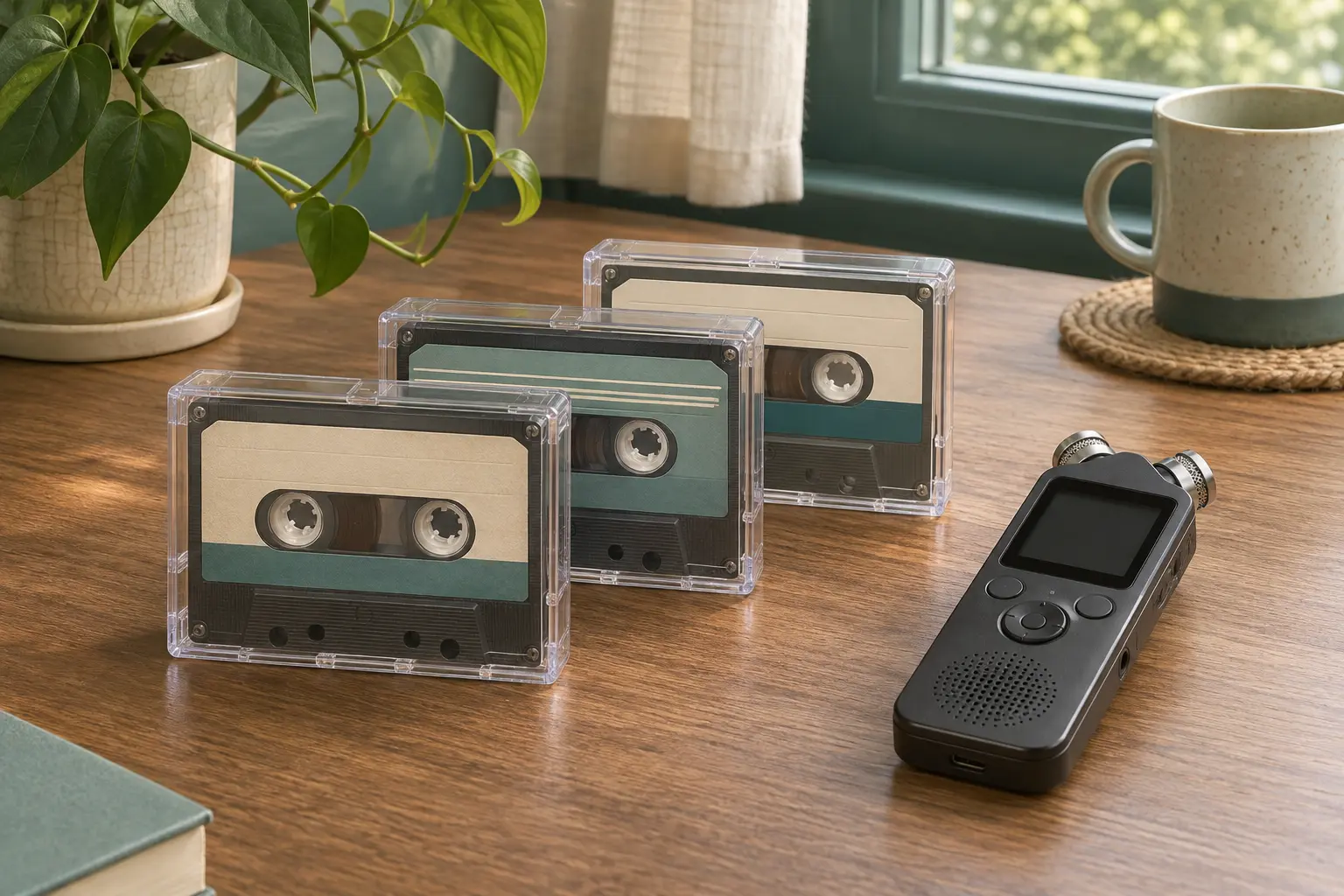
A box of family audio cassettes may hold conversations, songs and recordings nobody has heard for years. Before handing it over, a clear order matters more than the promise of perfectly clean sound. This checklist helps you agree the work and check delivery; it is not a guide to repairing or digitising tapes yourself.
1. List the cassettes and their sides
Give each cassette a number in a separate list. Photograph its shell, case and existing labels. For sides A and B, note known contents and the likely sequence. If the duration is unknown, say so: the number on the shell does not prove how much was recorded. Do not present a family guess about a date as an established fact.
Ask for confirmation that both sides are included, even unlabelled ones. Agree how blank sections, extra tapes and changes in scope will be handled. The Library of Congress guidance says not to play damaged tape. Tell the provider about damage beforehand rather than testing that cassette at home.
2. Separate the master from the processed copy
Specify separate files by cassette and side, clear filenames and a matching list. The Canadian Conservation Institute recommends retaining a WAV master; MP3 is a lossy listening copy. Request both and ask which is the master.
Agree pause removal, track splitting and noise reduction separately. Do not assume they are included. Request a short processing sample before it is applied to everything. Ask what will remain without that processing and what will change. A promise to recover every voice or remove all noise is not a verified result.
3. Agree privacy and return arrangements
Share only the information about the contents that the provider needs. For family conversations, ask who will have access, whether other contractors are involved and how files will be delivered. Agree link availability, working-copy retention and deletion arrangements. Do not default to a public link.
List every original and case in the order confirmation. Specify return arrangements, a contact for questions and a rule that additional work needs your agreement first. Keep the correspondence and inventory yourself.
4. Check delivery before closing the order
Match the files to your A/B list, including unidentified sides. Check that files open, each side has its beginning and end, and names are not mixed up. Listen to familiar passages and mark any question with its precise recording time.
If something is missing, request an explanation before accepting delivery. Check that all originals have been returned. Make a separate backup of the files and inventory: the provider’s link should not be your only access to a family recording.
AI-generated illustration, not a photograph of a specific service.